


Investment Strategies
Going Direct: The Evolution Of Family Office Private Market Investing

Here is another of the segments from this news service’s recent family office investment summit in New York City.
The following words are from Maxime Seguineau (main picture), founder and managing partner, Raido Capital. Seguineau moderated a panel at the recent Family Wealth Report investment summit in Manhattan. (See this report by our US correspondent for an overview.)
The blended portfolio approach gains momentum among
family offices
Family offices have emerged as one of the fastest-growing forces
in private capital markets, with 70 per cent now engaged in
direct investing according to Citi's 2025 Global Family
Office Report.
At the Family Wealth Report Summit on November 17, 2025, our panel of investment professionals – including Claire Champy (president, family office, Atlas Holdings), Brian Sun (vice president, Potenza Capital), Ira J Perlmuter (IJP Family Partners), and Pete Bennitt, CFA (pictured below) – explored how families are navigating the complexities of building successful direct investment programs. (Photos of the speakers are shown below.)

Peter Bennitt
Why Family Offices Are Accelerating Direct Investing
The motivations driving family offices toward direct investing are compelling. Beyond the obvious fee advantages of avoiding the traditional 2-and-20 model, families seek greater control over investment decisions and transparency into portfolio company operations.
BNY's 2025 Investment Insights For Single Family Offices report reveals that alignment of interests has become paramount, with a 52 per cent year-over-year increase in family offices citing this as a crucial consideration. This reflects families' desire to leverage their entrepreneurial heritage and industry expertise – assets that often remain underutilized in traditional fund structures.
Data Confirms the Structural Shift
The data validates this momentum. Nearly two-thirds (64 per cent) of family offices expect to make six or more direct investments in the coming year, representing a 10 per cent increase from the previous period according to BNY. Growth-stage companies (Series C and D) command the strongest preference at 52 per cent, as families balance risk with the potential for meaningful returns. The focus on established businesses over early-stage ventures reflects a pragmatic approach to direct investing, particularly given current market uncertainties.
The execution reality check Yet aspiration and capability often diverge. Our panelists emphasized a sobering reality: only half of family offices making direct private investments have private equity professionals on staff trained to structure and identify optimal opportunities.
Even more telling, just 20 per cent take board seats as part of their investments, suggesting limited bandwidth for the oversight and value creation that direct investing demands. The talent gap manifests differently across geographies. In the US, 44 per cent of family offices cite understaffing as a significant bottleneck according to BNY's research.
Non-US offices face additional challenges around limited scalability and smaller local opportunity sets. These constraints underscore why pure direct investing, while attractive in theory, remains impractical for many families without strong ties to independent sponsors.

Claire Champy
The Rise of the Blended Portfolio Model
The panel consensus pointed toward a more nuanced approach: deploying capital through a blended portfolio combining direct investments, partnerships with specialized independent sponsors, and select closed-end fund commitments with co-investment rights. This framework addresses the key challenges while preserving the benefits families seek.
Independent sponsors have emerged as particularly valuable partners. Unlike traditional private equity funds, they raise capital deal-by-deal, allowing families to evaluate specific opportunities without blind pool commitments. Research from Bastiat Partners and Kharis Capital indicates that 50 per cent of family offices plan to execute direct deals through independent sponsors over the next two years. These partnerships provide access to experienced operators and proprietary deal flow without requiring families to build extensive internal infrastructure.
Selective Fund Investing and Co-Investment Rights
The approach extends to traditional fund investments, where families are increasingly selective. Growth equity funds capture 28 per cent of private equity allocations, followed by buyout funds at 21 per cent, according to Citi's data. Critically, families are negotiating for co-investment rights that provide additional control and fee efficiency. Secondary transactions, engaging 30 per cent of direct investors, offer another tool for liquidity management – particularly valuable given the patient capital nature of family office investing.

Ira J Perlmuter
Aligning Investment Structures With Cash Flow Realities
Our panelists highlighted a critical insight often overlooked in direct investing discussions: the importance of matching investment structures to underlying cash flow patterns.
Families with irregular cash flows from operating businesses or liquidity events benefit from the flexibility of direct investments and deal-by-deal commitments. Conversely, those with regular, predictable income streams can more easily accommodate traditional fund capital call schedules.
This alignment principle extends to evergreen vehicles, which
have gained traction as a middle ground. These structures provide
deployment timing flexibility while maintaining professional
management – addressing both control and capability
concerns. During market dislocations, families with evergreen
allocations can act as patient capital providers, potentially
accessing attractive opportunities when others face liquidity
constraints.
Collaboration, Technology and the Next Generation
The institutionalization of family office investing continues to evolve. Club deals now represent 60 per cent of direct investment volume according to PwC's analysis, reflecting families' recognition that collaboration can enhance both deal access and risk management.
Technology adoption for deal sourcing and due diligence is accelerating, while next-generation family members – 73 per cent of whom are expected to change investment approaches according to Bank of America – bring new perspectives on sectors like AI and sustainable investing. The outsourcing of specialized functions represents another pragmatic adaptation.
Rather than building comprehensive internal teams, families are partnering with advisors, independent sponsors, and platform providers to access expertise on demand. This hybrid model preserves the control families value while acknowledging the complexity of modern private markets.
A Pragmatic Path Forward for Direct Investing
Our panel's message was clear: successful direct investing requires honest self-assessment and strategic pragmatism.
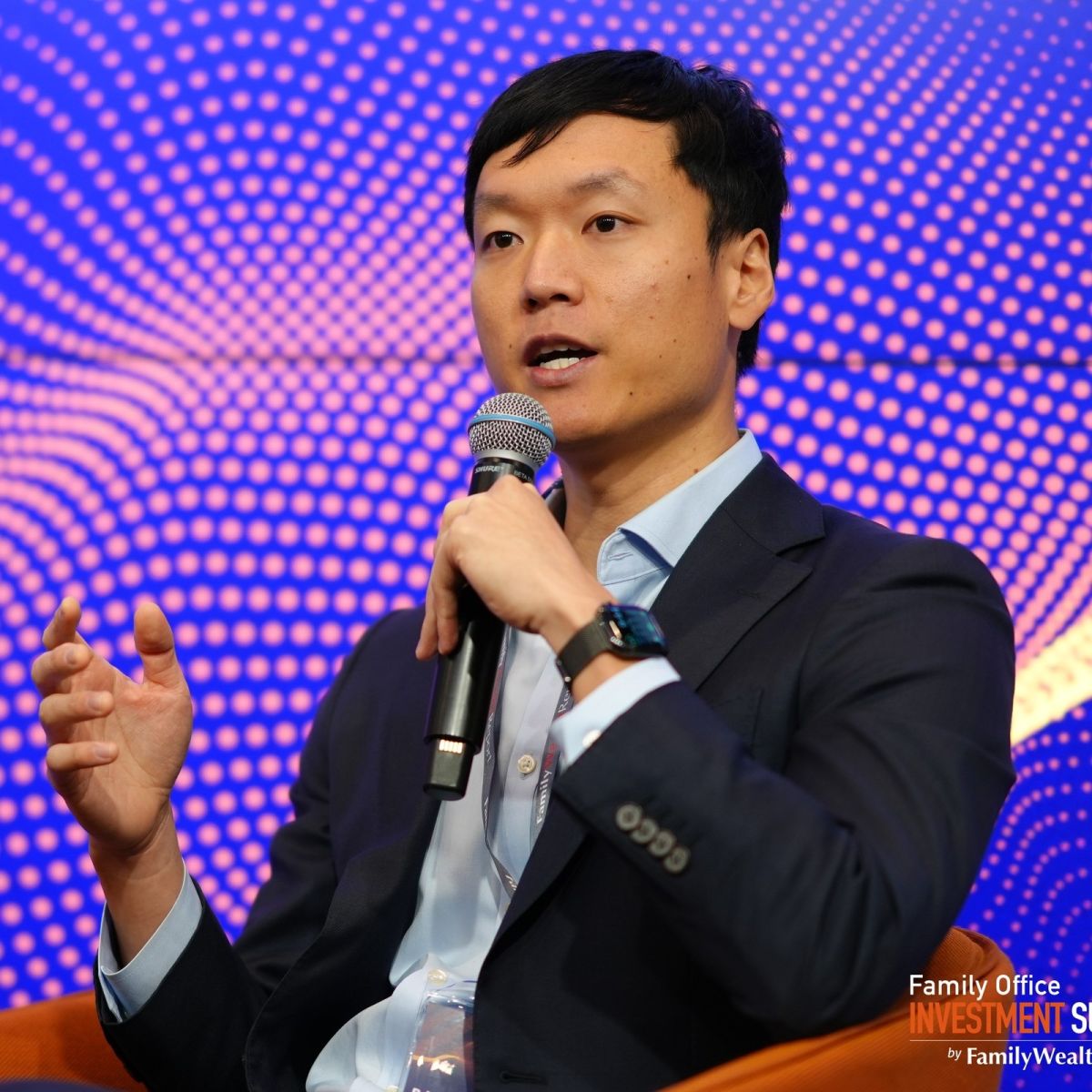
Brian Sun
The blended portfolio approach – mixing direct investments with independent sponsors, traditional funds, and co-investments – provides broader origination coverage, increased informational advantage, better diversification, and crucially, flexibility in fee and liquidity management. For most family offices, this framework represents not a compromise but an optimization, leveraging the unique advantages of patient family capital while acknowledging the realities of competing in institutional private markets.
As family offices continue their evolution from passive allocators to active investors, those who embrace this balanced approach will be best positioned to capture the opportunities ahead while managing the inherent complexities of direct investing.
About Raido Capital
Raido Capital invests in the financial domain. We manifest a secure economic future powered by intelligent augmentation and programmable finance. With an investor base consisting predominantly of family offices and UHNW individuals, we make growth-oriented investments in companies focused on streamlining legacy workflows, augmenting human participation, and enabling adaptive, autonomous growth in next-generation financial services.