


WM Market Reports
Family Offices' Investment Strategies - A New PwC Study
This publication carries a new report from PwC about family offices and the investment trends they have.
The PwC Global Family Office Deals Study 2025 helps analyze the trends shaping family office investment strategies worldwide. This summary shares key findings on the scale and sophistication of family office investment strategies.
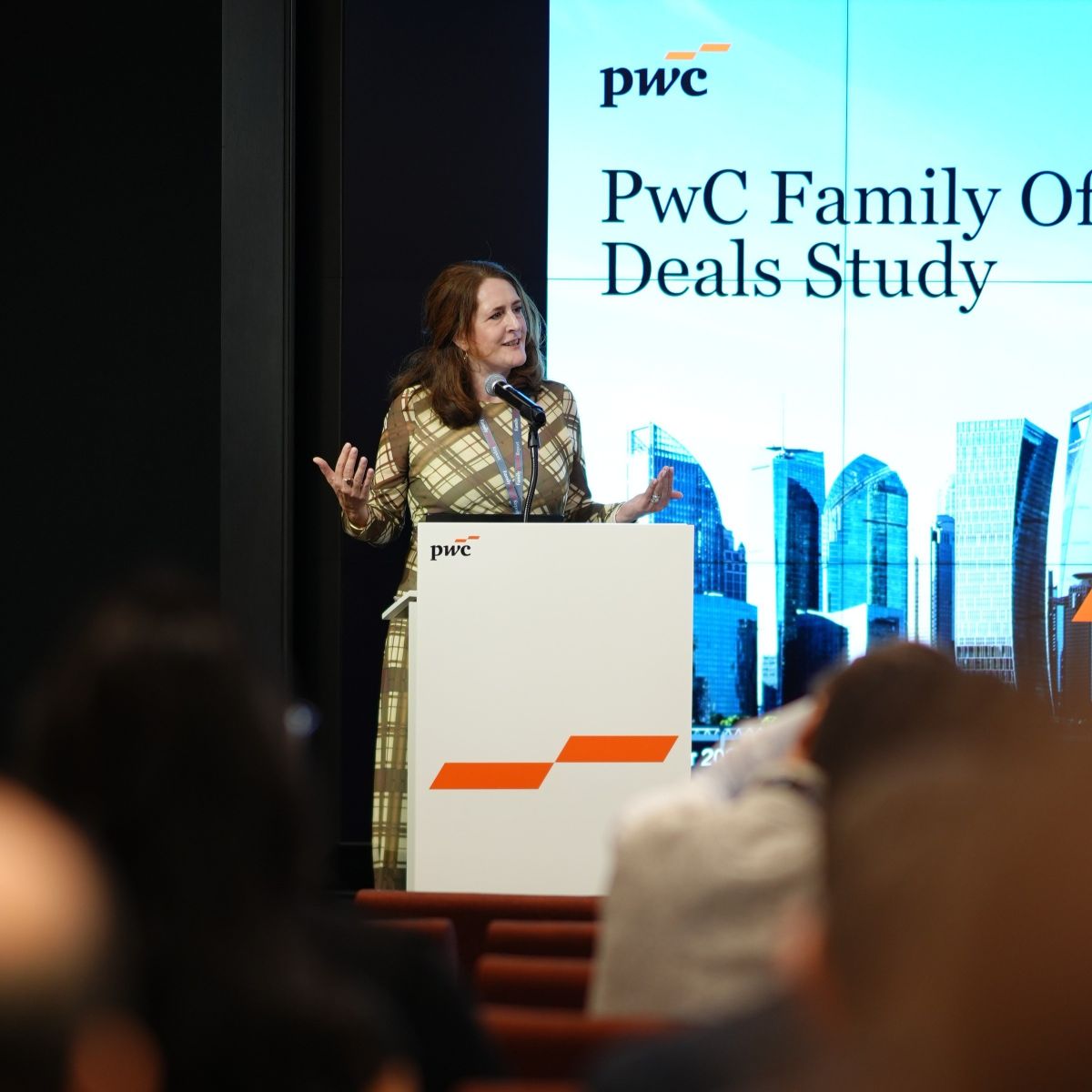
The main photo is of Belinda Sneddon, managing director, Family
Enterprise Advisory Services at PwC, who gave introductory
remarks about the new report. She spoke at the
Family Wealth Report Family Office Investment Summit in
Manhattan, held in November. (For more coverage of that event,
see here.)
Shifts in investment strategy
Family offices are prioritizing quality over quantity -
focusing on fewer, larger and more strategic deals. Deal volume
has reached a decade low, reflecting sharper selectivity in the
types of transactions they pursue. Rather than spreading capital
across many ventures, family offices concentrate resources where
deep expertise and active engagement promise greater value.
Club deals remain the most common structure, representing nearly 69 per cent of transactions. These joint efforts offer benefits such as shared sector expertise, risk diversification, lower due diligence costs, and stronger negotiating leverage.
Direct investment and custom structures
More family offices are shifting away from traditional fund
vehicles in favor of direct investments and custom structures
aligned to their goals. This approach helps provide more control
and enables structuring for alignment with family values,
operational capabilities, and long-term ambitions. The decline in
fund commitments highlights a growing appetite for deals where
family offices can engage directly and maintain active oversight.
Sector highlights: Real estate and private
equity
Real estate is now the top asset class, accounting for 39 per
cent of allocations in the first half of 2025 - up from 26 per
cent two years earlier. Notably, apartment complexes and land
development dominate, with aggregate deal value jumping from $2.1
billion to $7.5 billion over this period. Family offices are
capitalizing on market dislocations and urbanization trends while
leveraging their ability to navigate complex, long-term
development projects.
Private equity now makes up around 19 per cent of allocations, with a clear shift toward hands-on operations and long-term value creation. Offices are moving away from highly leveraged buyouts, instead favoring “buy and build” strategies, strategic collaborations, and extended holding periods that enable operational improvement and compounding returns.
Geographic and generational shifts
Family offices are expanding globally, with Singapore and the UAE
emerging as key hubs. North America remains the primary
destination, leading in both deal count and aggregate value.
Most family offices were established after 2001, and three-quarters benefit from the entrepreneurial involvement of their founders. Only 14 per cent were created following liquidity events. With over 30 per cent operated by entrepreneurs and only 12 per cent are run primarily by heirs, offices increasingly reflect a hands-on, growth-driven ethos.
Venture capital and innovation
Venture capital and private equity now make up half of deal
activity - reflecting a strong appetite for innovation and future
growth. Family offices are targeting AI, SaaS, fintech and
healthcare, where new business models and transformative impacts
are emerging. This forward-looking approach is supported by agile
structures and regular collaboration among family members,
operators, and industry experts.
Future outlook
High-performing family offices emphasize adaptability and
continuous learning. Direct investment, club deals, and real
estate will remain major areas of focus. Offices are also
prepared to respond quickly to shifting macroeconomic and
regulatory environments, leveraging networks and expertise to
help unlock new opportunities.
Family offices in 2025 are defined by discernment, collaboration, and a sustained focus on value creation—especially in real estate, private equity, and innovation-led sectors.
PwC Global Family Deals Study can be found here.