
Yesterday, the US Senate confirmed that Kevin Warsh will be chair of the US Federal Reserve, serving a four-year term, amidst higher inflation and pressure on interest rates.
The 54 to 45 Senate vote on Wednesday was split along party lines. Warsh officially stepped into the role this week when the term of outgoing Fed chair Jerome Powell came to an end.
The move comes after US annual inflation rose to 3.8 per cent in April, against market expectations of 3.7 per cent, driven by the oil shock triggered by the Iran conflict. The rise came after the US Federal Reserve, the European Central Bank, the Bank of England, and the Bank of Japan all left interest rates on hold last month, as expected. Inflation is front of mind amidst the US/Israel-Iran conflict, fraught geopolitics and rising energy prices, with rate rises back on the table, despite pressure from US President Donald Trump to reduce them. See here.
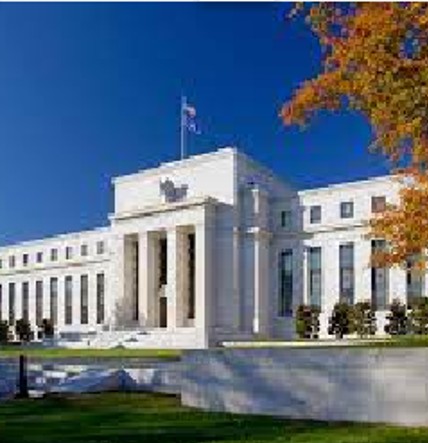
Federal Reserve building in Washington DC
David Roberts, head of fixed income at London-headquartered Nedgroup Investments, thinks that Powell going/Warsh coming in is much less relevant than it was. Or should be.
“What impact will Powell hanging around the Fed have on US monetary policy?" Roberts said in a note. “US inflation is way above target, thanks in no small part to the Middle Eastern conflict, it seems set to rise further. So far growth and employment have held up well. That combination makes it very difficult for the Fed with or without Powell to reduce rates any time soon. Indeed, the market is now pricing the next move to be a hike – even with Warsh at the helm.”
“Warsh only has one vote, so the idea he'll move the Federal Open Market Committee to cut any time soon seems far fetched,” Roberts continued. “If he does, it's unclear what the market would do – right now I'd bet US bonds get a kicking. More so than they already have.”
“Stimulating an economy that seems to be firing on most cylinders would raise short and longer-term inflation expectations – we'd most likely get a bear steepening market, bond prices falling with long maturities faring worst. And that's good for very few people, certainly not good for a heavily indebted country such as the US,” Roberts said. “The bar to Fed cutting US rates has been raised. With or without intervention from Warsh, Powell or even Donald Trump.”
His view was echoed by Colin Finlayson, investment manager at Aegon Asset Management. “With an economy that currently does not appear to need lower rates and now the threat of inflation in the future, Warsh looks increasingly unlikely to deliver the rate cuts that the market – and the White House – had previously expected," Finlayson said. "As only one vote on a committee of 12, the new chair may have to bide his time before building a case for lower rates and instead have to contend with a committee that is becoming increasingly hawkish. The over simplistic view that a Warsh-led Fed would automatically mean lower interest rates looks to be over," Finlayson continued.
“A Warsh Fed would likely rely less on expanding the balance sheet and signaling every next move, and more on market pricing, private capital and fundamentals,” Lale Akoner, eToro global market strategist, added. “That points to a gradual shift toward a smaller, shorter-term Fed balance sheet, with private banks playing a greater role in absorbing liquidity and government debt.”
“For investors, this creates clearer winners and losers, while shorter-dated bonds could benefit from possible cuts once the energy shock is over, longer-term bonds may see less upside if inflation concerns and government borrowing keep yields higher,” Akoner continued. “Financials, banks, insurers, asset managers, value and cyclical stocks could benefit, while speculative growth, highly indebted companies and weaker high-yield borrowers may find markets less forgiving.”
“Ultimately, a Warsh Fed would not necessarily be a tightening shock, but it would change how risk is priced, leaving markets more exposed to volatility and putting a greater premium on quality, diversification and active positioning,” Akoner said.