
The world of “passion investments” covers many forms, from classic cars through to fine wines, stamps and paintings. And the field does not come more eye-catching than Pokémon cards. This is now big business.
Pokémon cards are collectable, playable trading cards based on the Pokémon media franchise, first released in Japan in 1996. They are used in a tabletop game – the Pokémon Trading Card Game – involving battling with decks or collected for their rarity and artwork.
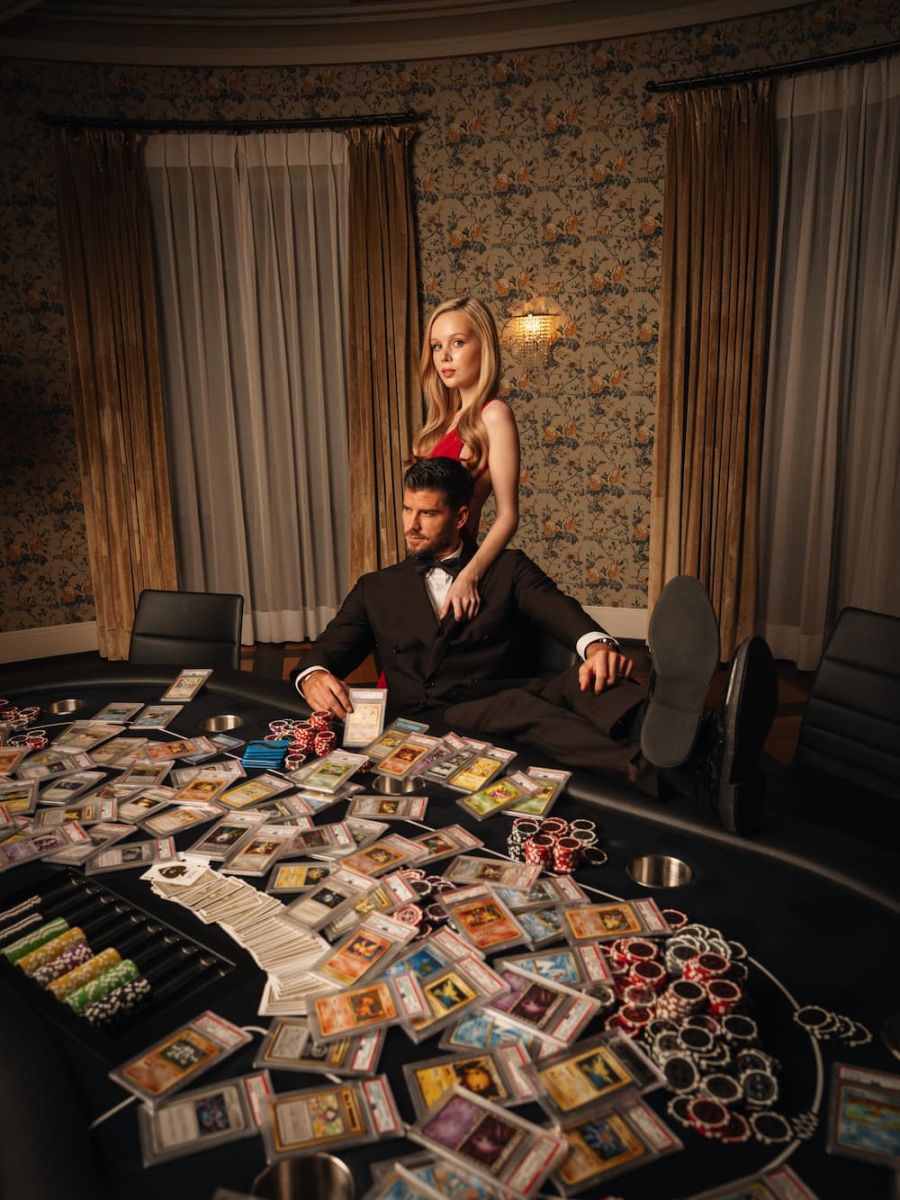
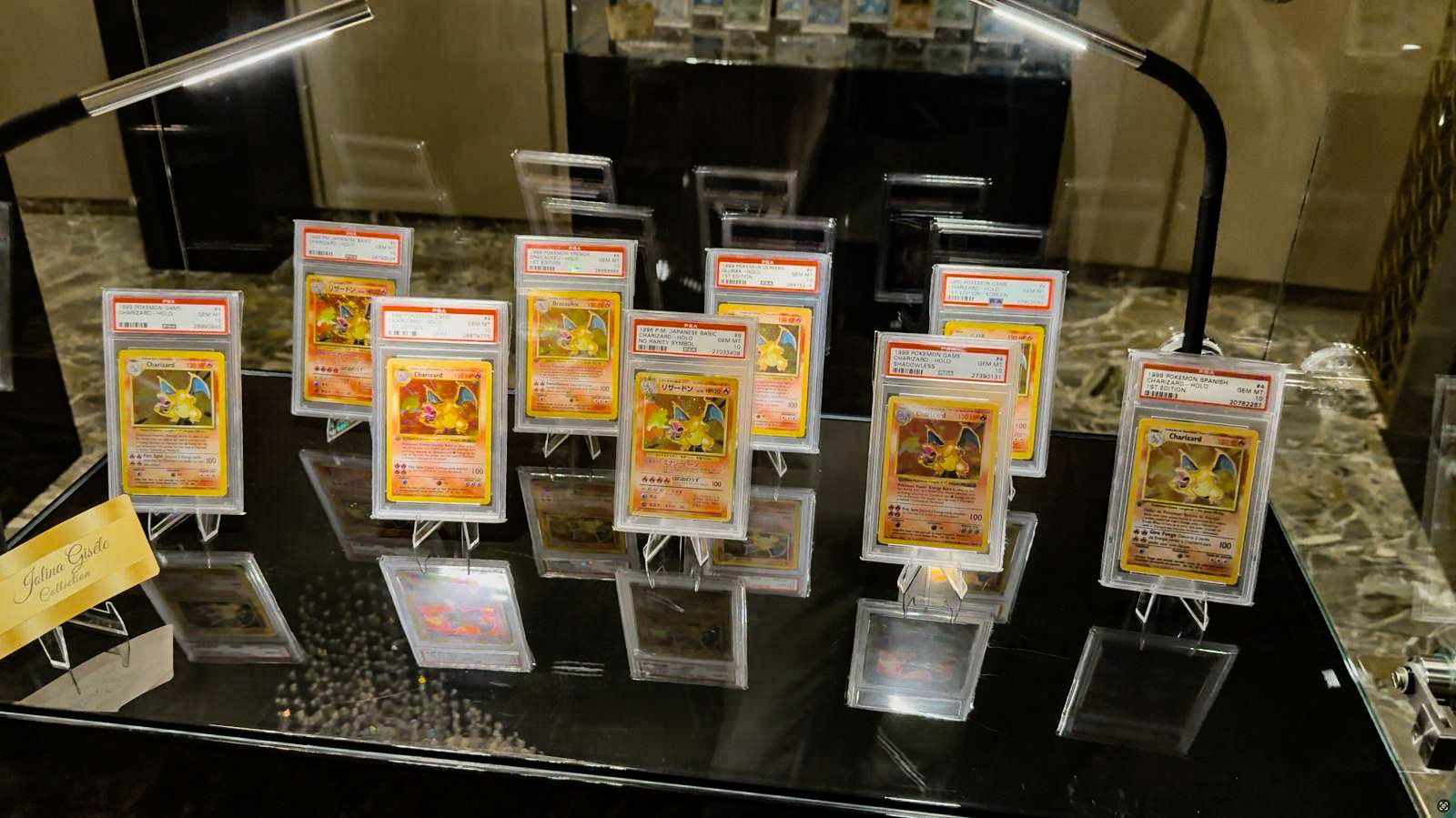
The Jolina Gisèle Collection, which has come to light in Switzerland, is regarded as one of the most exclusive and comprehensive private collections worldwide. It comprises more than 60,000 cards. Its existence sheds light on a global cultural phenomenon. Jolina Gisèle said she released the collection to mark the 30th anniversary of Pokémon – as a gift to the fan community. The holders of the collection are willing to sell it. WealthBriefing understands that there are already concrete prospective buyers and that the family is actively engaged in discussions in this regard. The family is in no rush to complete the sale – ultimately, it is the highest bidder who will succeed.
A report by Bloomberg on 24 April this year said the global trading cards market, valued at $15.8 billion in 2024, is projected to reach $23.5 billion by 2030.
“The generation that grew up passionate about these things – whether Pokémon cards, vintage sneakers, or early comic books – has now reached an age and a level of financial means where they can act on those passions at scale,” Margot Lorenz , a Zurich-based wealth management figure, told WealthBriefing in an interview. “Childhood enthusiasm, combined with adult capital, is a powerful force. And that emotional connection to the asset is precisely what sustains demand and drives value over time.”

Margot Lorenz
“For wealth managers, this has two implications. First, we need to be genuinely informed about these markets – not superficially, but well enough to advise clients who hold significant value in them or who wish to allocate to them. Ignoring a market because it feels unfamiliar is not a strategy,” Lorenz, who is deputy CEO international and partner at Portas Capital, said. “Second, and perhaps more interestingly, these topics offer a remarkably natural way to connect with younger clients and the next generation of wealth. Asking a young person about their collection is not small talk – it is relationship building. And in our business, relationships are everything,” she continued.
Lorenz has a client with a Pokémon card collection. She declined to identify him by name but explained the significance of a collection that goes beyond money.
“The client is a successful entrepreneur in the software industry. His entry into the world of Pokémon collecting came about through his daughter, who was seven years old when she discovered that Pokémon cards were a wonderful social currency among children – a natural way to make new friends,” Lorenz said. “At her request, he began helping her build her collection, and what started as a small act of parental support gradually took on a life of its own. Over time, he found that the hobby brought him genuine joy – not merely as a pastime, but as a shared pursuit that deepened the bond between father and daughter. The collection grew out of that connection, and it is that story of family and passion that gives it much of its character.”
The rise of such collections, while drawing on new features of culture, fits with enthusiasms that youngsters have exhibited for decades, such as cards of footballers; movie star posters; vinyl record covers; sports programmes, model cars, Star Wars and James Bond memorabilia, etc.
“I’ll be candid – when my client first approached me, I had virtually no idea that Pokémon cards had reached the level of value they command today,” Lorenz said. “I was aware of Pokémon as a cultural phenomenon, but it had never been part of my own world growing up, and I had given it little thought since. So, when he described the collection and what it was worth, I was genuinely astonished – almost disbelieving, initially.
“That prompted me to do my own research, and what I found was remarkable. This is not a niche curiosity; it is a deep, passionate, and highly liquid market with serious collectors and serious money behind it. I also noticed, quite close to home, that the children of many of my own friends knew exactly what Pokémon was – and were collecting themselves. The continuity across generations is striking,” she said.
The Pikachu Illustrator impact
“What truly brought the scale of this market into focus for me was discovering cases like Logan Paul’s auction of his Pikachu Illustrator card, which fetched an extraordinary $16.9 million – a figure that, when I first encountered it, I had to read twice,” Lorenz said.
“As for the collection itself: it is the breadth, depth, and above all the quality that sets it apart. With over 12,000 PSA-graded cards – many of them exceptionally rare and simply not available on the open market – this is not a collection one encounters every day. It left quite an impression,” she said.
WB asked Lorenz about the significance of the Jolina Giséle Collection.
“The Jolina Gisele Collection is, in many ways, still at the beginning of its public story. The family made a very deliberate and thoughtful decision to make the existence of this extraordinary collection known – partly because they felt it was simply beautiful for fellow collectors and fans around the world to know that something of this scale and quality exists. And what better moment to do so than the thirtieth anniversary of Pokémon itself, a milestone that felt both fitting and meaningful,” she said.
“In the time since, the level of interest and the logistics surrounding the collection have grown considerably. The family has now decided that the time has come to sell – but they are not simply looking for the highest bidder. Their wish is for this masterpiece to be preserved as a whole, in its entirety. Ideally, they envision it finding a home with a buyer who would transform it into something accessible to the public – perhaps a museum, where passionate collectors and fans from around the world could one day come and experience this remarkable body of work in person,” she said.
Unfortunately, as with fine art and other collectables, success draws in criminals, which means collectors and interested parties must guard against fakes and ensure that security is in place. Bloomberg reported on 24 April that Singapore, to take just a single case, has logged more than 600 e-commerce scams involving Pokémon cards since October 2025, with losses of at least S$1.1 million . In a single case in the US, scammers attempted to cheat trading card collectors out of more than $2 million, while a string of card shops across the US and Europe have been broken into in recent months.
“The response, fundamentally, is the same as it has always been in the world of high-value collectables: rigorous due diligence, proper authentication, and robust physical and financial safeguards,” Lorenz said. “In the case of the Jolina Gisele Collection, the family has taken exactly the right approach. The entire collection is held in secure, professional third-party storage – fully protected and comprehensively insured. These are not afterthoughts; they are baseline requirements for any collection of this magnitude.”
The tech effect
Another feature is the way in which the cards have been also boosted by technology.
“Pokémon is a fascinating case study precisely because it has never been a purely physical phenomenon,” Lorenz said. “From the original Game Boy games to the trading cards, from the animated series to Pokémon GO – which famously brought millions of people out into the streets – the franchise has always moved fluidly between the digital and the physical world. That crossover quality is part of what has given it such extraordinary longevity and such a broad, multigenerational appeal.”
“But I think the deeper point is this: digital technology has fundamentally changed the way people discover, share, and ascribe value to things. Communities form online around shared passions with a speed and scale that simply was not possible before. That has an enormous amplifying effect on collectable markets – it creates global demand for things that might once have remained local curiosities,” she said.
“There is undoubtedly an element of escapism at play, and I would not dismiss that lightly. In times of geopolitical uncertainty, market turbulence, and relentless news cycles, people naturally seek anchors – things that feel meaningful, joyful, and within their control. Returning to a childhood passion, or discovering one through a child of your own, as my client did, offers exactly that. There is something deeply human about it,” Lorenz continued.
“But to reduce this market to mere escapism would be a serious mistake. The numbers simply do not allow for that interpretation. When a single card changes hands for nearly $17 million dollars, when major auction houses dedicate entire sales to Pokémon, when institutional collectors and family offices begin taking note – something far more substantial is happening. This is a market with genuine depth, genuine liquidity, and genuine price discovery. That is not escapism. That is an asset class,” she said.
Lorenz said she wanted to share a wish with the Gisèle family.
“What they have built together – a father, a daughter, and a shared passion that grew into something truly extraordinary – deserves an ending that honours its story. My sincere hope is that they find a worthy new custodian for this remarkable collection; someone who recognises not only its financial significance, but its cultural and human value. And perhaps most of all, I hope that one day the wider world will have the opportunity to experience this masterpiece in person – to stand before it and appreciate, as I have, just how extraordinary the Jolina Gisele Collection truly is,” she added.