
The following article is from Juan Carlos Freile , who is the CEO and a founding partner at Tiempo Capital. He talks about what goes under the broad term of “impact investing” and how this affects, and is linked to, the way that family offices are governed. The editors welcome this contribution to debate and invite readers to respond. Jump into the conversation by emailing tom.burroughes@wealthbriefing.com and amanda.cheesley@clearviewpublishing.com The usual editorial disclaimers apply to views of guest contributors.
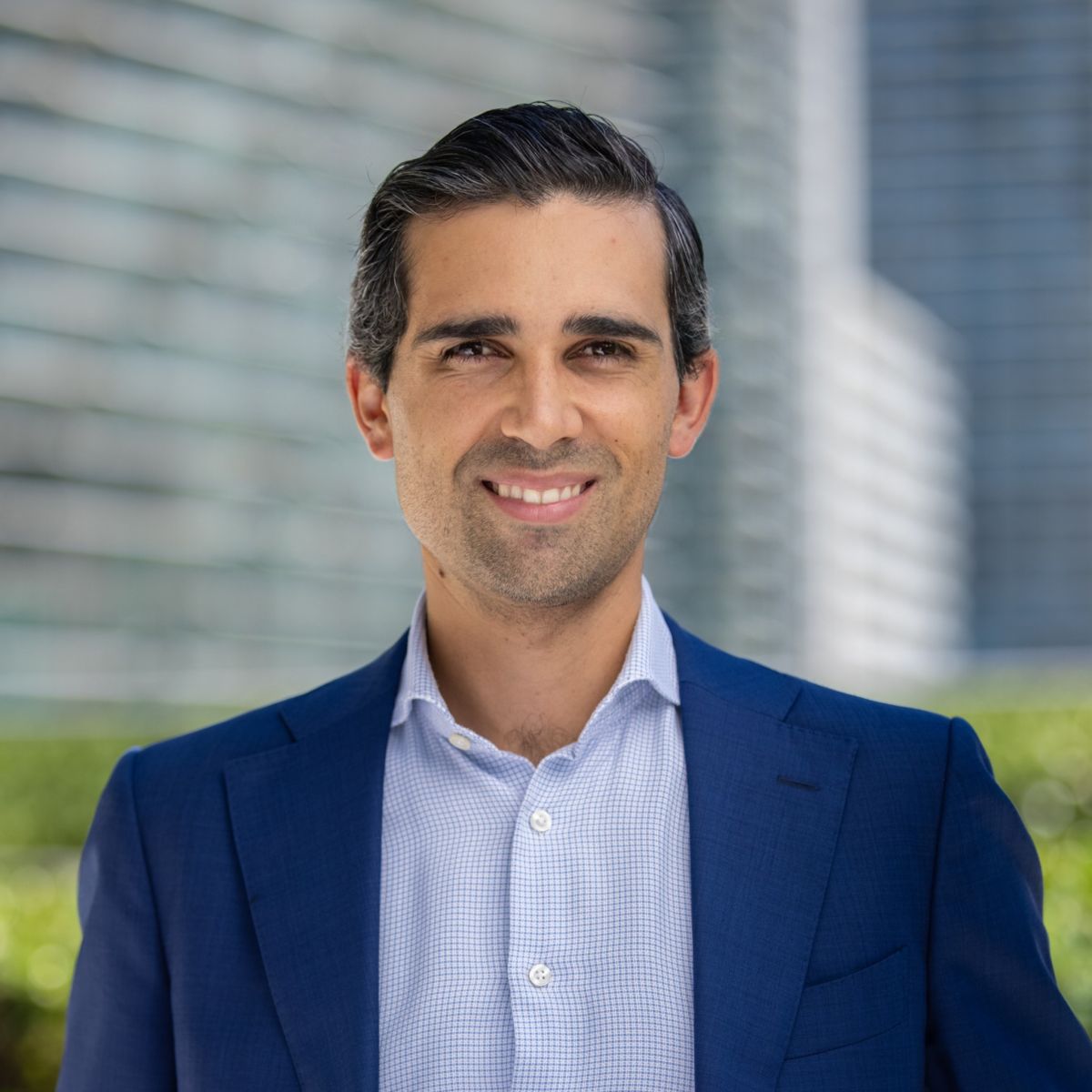
Juan Carlos Freile
For many family offices, the question is no longer whether impact investing is appealing. That debate is effectively over.
The real question is whether the family has the structure to execute it.
Impact investing is often framed as an extension of values. In practice, it is something else entirely. It forces a family office to define objectives with precision, allocate decision-making authority, and commit to a method of measurement that can withstand scrutiny over time. Without that, it does not scale.
The shift in the market makes this unavoidable. Impact investing now exceeds $1.5 trillion globally and has grown at roughly 21 per cent annually since 2019, even in a volatile macro environment .
This is no longer a niche strategy. It is a capital allocation decision competing for space in institutional portfolios. And that changes the standard.
Start with the definitions – but recognize their limits
It is still useful to distinguish ESG, SRI, and impact investing. But definitions alone do very little work in practice.
ESG informs analysis. SRI excludes exposures. Impact investing introduces intentionality and measurement.
The problem is not the definitions. The problem is that families often use them interchangeably while expecting very different outcomes.
One family wants exclusion. Another wants integration. A third wants measurable outcomes tied to specific themes. Those are fundamentally different mandates. Treating them as interchangeable is where most implementation failures begin.
Clarity at this stage is not academic. It is operational.
The friction is not in ideas – it is in execution
Most families do not struggle to agree on broad themes. Climate, healthcare, education – these are not controversial starting points.
The difficulty begins when those themes need to be translated into capital allocation decisions.
What is the mandate? Is impact integrated across the portfolio, or isolated in a sleeve? Who has authority to decide what qualifies? What tradeoffs are acceptable? How is success defined over time?
These are governance questions, not investment questions.
And they are becoming harder to ignore. The latest GIIN survey captures 429 impact investors across 54 countries, reflecting a market that is both larger and more complex than it was even a few years ago.
At the same time, family offices themselves have scaled. The UBS Global Family Office Report 2025 reflects 317 family offices managing an average of $1.1 billion each, operating with institutional levels of capital but often without equivalent governance frameworks.
This is where the tension emerges. The capital base has institutionalized faster than the decision-making process.
Scale increases complexity – not clarity
The assumption that more capital leads to better structure is not supported by the data.
Family offices remain heavily allocated to alternatives – around 42 per cent of portfolios globally – with increasing exposure to private markets, infrastructure, and thematic investments.
Impact strategies often sit inside those same asset classes.
That overlap creates complexity, not simplicity. It introduces longer time horizons, less standardized reporting, and more subjective definitions of success.
Without clear governance, these strategies do not integrate cleanly. They compete with existing allocations, create ambiguity around objectives, and introduce internal friction that is often misdiagnosed as an investment issue. It is not. It is structural.
A framework is not optional
For family offices considering impact investing, governance is not a supporting function. It is the starting point.
The sequence matters:
First, define the mandate.
Not in general terms, but in operational ones. What outcome is being pursued, and how does it rank relative to financial objectives?
Second, assign decision rights.
Someone must have authority to determine qualification, enforce discipline, and exit positions that no longer fit.
Third, establish measurement upfront.
Not after capital is deployed, but as part of mandate design. Measurement is not reporting, it is control.
Fourth, define the review process.
Impact strategies require iteration. Without a structured review cycle, they drift.
None of this is optional if the objective is to build a repeatable process rather than a one-off allocation.
Measurement is the dividing line
This is where impact investing either becomes credible or collapses into branding.
The industry has already moved. Approximately 89 per cent of impact assets now target market-rate returns, eliminating the idea that impact requires financial concession.
At the same time, capital deployment continues to accelerate, with nearly $50 billion invested in 2024 alone.
Scale is no longer the constraint. Measurement is. Even at the institutional level, measurement remains inconsistent. Academic and industry research continues to highlight that impact data is often incomplete, difficult to compare, and not always useful for decisions.
For family offices, that creates a clear dividing line. If impact cannot be measured consistently, it cannot be governed. If it cannot be governed, it cannot be scaled.
What family offices tend to underestimate
Three things are consistently underestimated.
First, impact investing is not an investment overlay. It is a governance layer.
Second, the hardest work happens before capital is deployed. Once the allocation is made, most of the important decisions have already been taken – explicitly or implicitly.
Third, tradeoffs are unavoidable. The question is not whether they exist, but whether they are defined in advance.
Families that treat impact as an extension of existing processes tend to struggle. The ones that treat it as a distinct discipline tend to build something durable.
A better way to frame the conversation
Impact investing is not about aligning capital with values. That is the entry point, not the outcome.
The real question is whether a family office can translate those values into a structured decision-making system.
That requires clarity of mandate, clarity of authority, and clarity of measurement. Without those elements, impact remains an intention. With them, it becomes an institution.
About the author
Juan Carlos Freile is the CEO and a founding partner at Tiempo Capital. Previously an executive director and banker at JP Morgan Private Bank, he advised wealthy individuals and families in the US, Puerto Rico, and Latin America, where he was responsible for more than $2 billion in client relationships.
For nearly 15 years in his former role at JP Morgan, Freile led an integrated team providing customized wealth management solutions including investing, wealth structuring, fiduciary services, philanthropy, banking and credit. Previously, he worked in Investment Banking, at Goldman Sachs in New York City, advising and executing for Latin American institutional clients with trading and hedging solutions in fixed income, currencies, and commodities. For the past decade, he has been a CFA charter holder and a member of the CFA Society of Miami.
Footnotes
1. Global Impact Investing Network , State of the Market 2025: Trends, Performance and Allocations, Dean Hand et al.
https://thegiin.org/publication/research/state-of-the-market-2025-trends-performance-and-allocations/
2. Mette Lindbæk, GIIN State of the Market 2025 report shows rapid growth, NORNAB
https://www.nornab.no/news/giin-state-of-the-market-2025-report-shows-rapid-growth-in-a-volatile-global-economy
3. UBS, Global Family Office Report 2025, UBS Global Wealth Management
https://www.ubs.com/content/news/en/2025/05/21/global-family-office-report-2025.html
4. Goldman Sachs, Family Office Investment Insights Report 2025, Goldman Sachs
https://www.goldmansachs.com/pressroom/press-releases/2025/2025-family-office-investment-insights-report-press-release
5. BlackRock & Illuminas, Global Family Office Survey 2025, BlackRock
https://www.blackrock.com/institutions/en-zz/insights/global-family-office-survey
6. Gorgi Krlev et al., Impact investing’s measurement challenge, World Economic Forum
https://www.weforum.org/stories/2025/10/measuring-impact-investing/