
The following article is from Alpesh Patel , who is a strategic partnership director at Cartex, a new fintech marketplace. He is a senior executive with more than 25 years’ experience in fintech, cryptocurrency, card issuing, and payments sectors in the UK and globally.
The editors are pleased to share these ideas and hope they prompt conversations. To get involved, email the editors at tom.burroughes@wealthbriefing.com and amanda.cheesely@clearviewpublishing.com The usual editorial disclaimers apply to views of guest writers; we are grateful to Alpesh for his contribution to debate.
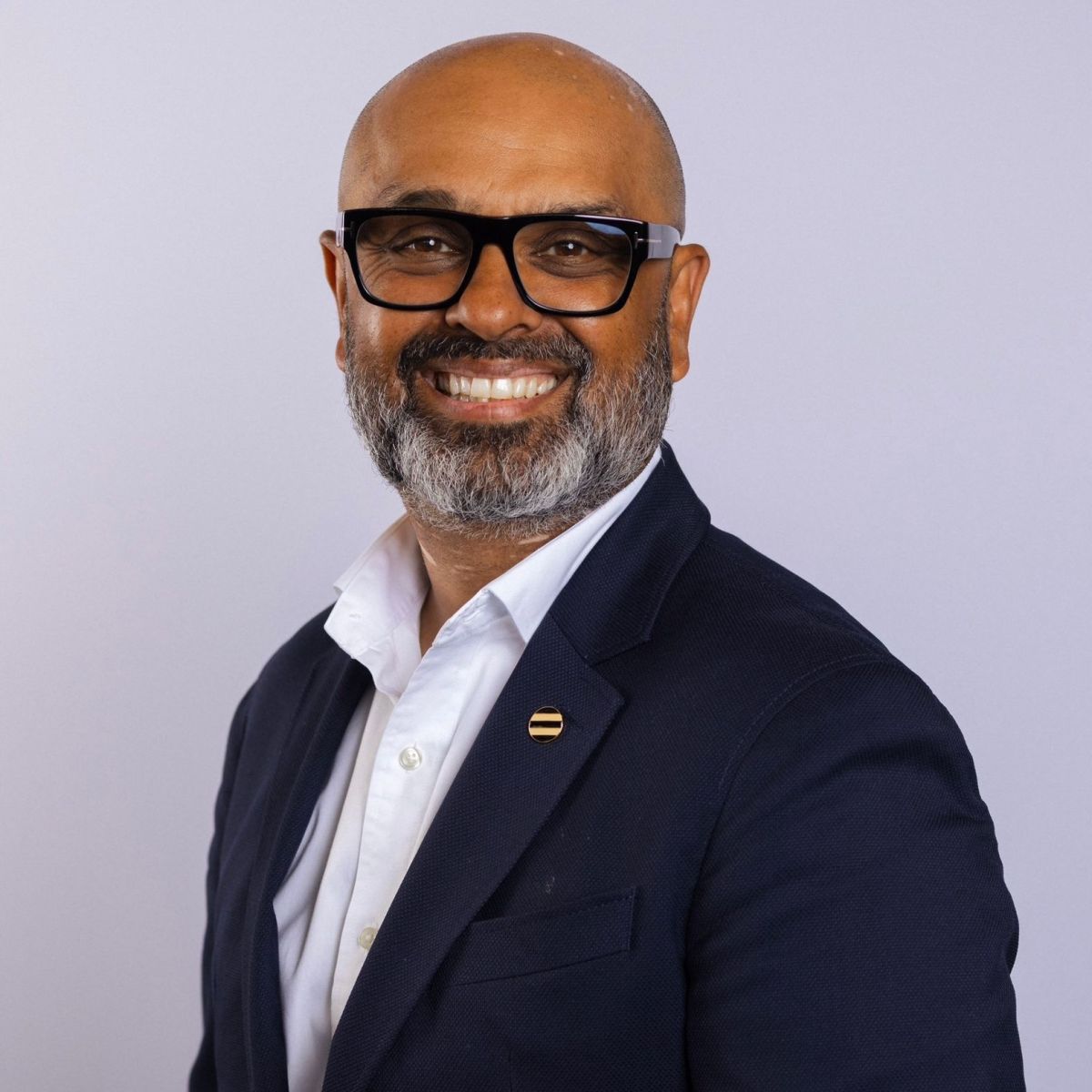
Alpesh Patel
Wealth management might still be associated with an old-fashioned approach to managing billions of dollars, but it’s changing rapidly today. The industry is projected to double in size in just four years and, as it expands, it faces more challenges. Essentially, the environment in which managers operate is becoming more complex.
Every year, the world grows more interconnected, so that capital is increasingly flowing across countries and accounts. While previously asset managers were mostly focused on which allocation to choose for portfolios, today they are more concerned about how their clients’ capital reaches where managers want it to go, without friction. And the problem is, it often doesn’t flow as smoothly as they want.
Wealth management is not only about advice
It’s easy to think about wealth managers as strategists who decide where to allocate capital and how to effectively build the client’s portfolio. But their job is much harder than we can imagine, as managers or their co-workers spend at least 30 to 40 per cent of their time on manual reconciliation.
The reason is that they are also responsible for more operational tasks, such as how capital reaches its destination. Capital flows become more global, as modern portfolios often span regions and assets; for example, equities are typically bought from the US, accounting for up to 85 per cent of the market. But there can also be other markets involved, having assets also from emerging ones that make up around 10 per cent of modern portfolios.
Moreover, the assets themselves can be very different and be subject to various jurisdictions and rules. A single portfolio can include equities in one market, private assets in another, and several currencies bought on different FX markets. Data show that many family offices allocate more than 50 per cent to alternatives such as private equity, credit, and real estate, often across varied markets. As a result, it creates a dilemma of fragmentation, because capital movement resembles more of a web of interconnected systems, each with its own rules.
Beyond simply taking up time, this fragmentation also stops wealth management firms from growing. To reach each additional market or asset class, the company must carefully plan and add new routing logic or compliance checks, which, of course, creates new bottlenecks.
Why traditional infrastructure is breaking
At the heart of this complexity is not just the portfolio's internalization itself. The issue lies in the infrastructure that supports capital movement, because much of it is still built on legacy systems that haven’t changed for years.
Take, for example, how cross-border payments happen today. Most international settlements must pass through corresponding banks before arriving, so it takes time, at least a few working days. Beyond time, every middleman charges a fee of around 6 to 7 per cent, and the bank that receives the money normally deducts its processing cost. At first sight, it seems not much, but when it comes to managing multi-billion-dollar wealth, there could be serious deductions.
But the time and costs are only part of the problem. What makes these systems particularly outdated is the lack of transparency. Once a payment or a transfer is initiated, it often becomes difficult to track in real time where it is or predict when it will arrive. Because of this, wealth managers don’t have a full picture of the routing path, and, therefore, they can't provide transparent answers to their clients.
It is interesting that managers themselves acknowledge the problem but continue to rely on legacy processes, highlighting how much of the core infrastructure remains outdated. Forty-four per cent of them say their technology is outdated, and 31 per cent add that it’s not a good fit for their purposes. These legacy systems limit firms’ capabilities to such an extent that by 2028, the companies that fail to modernize will lose $57 billion.
The existence of different allocation strategies only adds fuel to the fire. There are various methods for transferring clients’ funds, such as brokerage accounts or wires. No matter what exactly it is, firms are forced to manage multiple systems simultaneously, each with its own way of operating.
At the same time, client expectations themselves are evolving: In the era of digital finance, investors expect the same level of speed and quality they experience elsewhere. Reports show that nearly half of investors are ready to embrace AI in portfolio management. And this openness is for a reason: they understand that financial needs have become more complex in recent years, underscoring the importance of efficient execution on the managers’ behalf.
Moving away from fragmentation
As a result, modern portfolios pose a range of challenges for managers. A significant share of operational effort and cost, around 30 to 40 per cent, is tied to investment management and execution processes, reflecting the complexity of managing and moving capital. But the good news is that there are already solutions in place to move away from this type of fragmentation. Instead of remaking the financial intermediaries system from scratch, fintechs are uniting on a single infrastructure that wealth managers already have.
One of the most helpful solutions is called payment orchestration. From the outside, the technology works quite simply: these orchestration platforms sit above existing financial rails, coordinating them. They don’t rely on a single corresponding bank or provider; instead, they help wealth managers access multiple networks through a single integrated layer. Think of payment orchestration as a “king of transactions,” who sits above and controls every process.
In practice for the wealth industry, this means that managers don’t have to manually decide how money should move between jurisdictions or accounts and spend half of their working time on routine workflows. The system can automatically select the most efficient route and switch providers if needed. When managers want to connect to new markets or currencies, they don’t need to integrate them separately because the orchestration process has already handled it. In the end, what used to require tons of manual work and tracking is becoming more automated.
However, orchestration alone does not eliminate fragmentation, as broader modernization happens across different layers. For example, APIs can also be used to connect custodians, banks, portfolio systems, and execution platforms into a unified environment. As a result, many firms can have real-time data exchange and many fewer reconciliation gaps.
Another critical shift is the move toward T+1 settlement cycles, reducing the time it takes for trades to be finalized and funds to become available. Today, more than 55 per cent of global market activity settles T+1, and this number is expected to rise to 85 per cent by 2028. For wealth managers, this can be a significant improvement, as it takes the operational burden off their shoulders, much as APIs and orchestration do.
Final thoughts
The real challenge in modern wealth management lies in how investment decisions are realized and whether execution is effective in the end. Portfolios and instruments are becoming more widespread, but the infrastructure through which capital flows remains sluggish. That’s why the ability to move capital efficiently has become just as important as the strategy itself. Because in a world where the underlying infrastructure lags the development, even the best allocation and the best strategic idea can fail.