
After several weeks of bombshell news involving artificial intelligence and financial advisors, it was fitting that the T3 Technology conference broke precedence by devoting an entire day to educational AI sessions and demonstrations.
Altruist’s rollout of a game-changing AI tax planning tool; Anthropic’s deals with LPL Financial; Orion and Goldman Sachs; and major AI product announcements from Betterment and Apex Fintech Solutions, among a slew of others, clearly whetted the appetite of advisors and vendors who crowded into the “AI University” sessions the day before the official opening of the venerable fintech conference.
Agentic AI, which works autonomously and proactively, was the topic du jour. While doing real time demos, speakers also emphasized the need for context when using AI, integration, prompt engineering, standardization and security requirements.
AI as co-worker
The concept of AI as a co-worker that is rapidly evolving from simple chat interfaces into a reliable software agent that can perform real operational tasks inside financial advisory firms was demonstrated by consultant Craig Iskowitz, CEO of Ezra Group.
Using tools such as Python and modern AI models, Iskowitz showed how small agents can move data between applications, monitor activity, and trigger actions automatically. In one example, an agent automatically transferred new client information from an onboarding questionnaire system into a CRM –creating the contact record, mapping key data fields like address and birth date, and generating follow-up tasks for advisors.
In another demonstration, a compliance monitoring agent scanned client meetings in the CRM and flagged those missing required notes, helping firms identify regulatory risks before they become problems.
This type of automation no longer requires a large engineering team, Iskowitz noted. “With modern AI tools assisting with coding and debugging, a single person can now build functional workflow agents in days,” he said.
AI will be far more disruptive than robo-advisors ever were, Iskowitz maintained. Robo platforms only automate portfolio management, he pointed out, while AI can replicate much of the thinking work advisors perform, including analyzing financial situations, comparing strategies, and generating planning recommendations.
“The biggest risk to advisors isn’t that AI replaces them, it’s that clients start asking AI the same questions they currently ask their advisor and realize the answers come back instantly,” Iskowitz warned.
“This change is insane”
Without using coding, Kanishk Parashar, CEO of software developer Powder, showed how his company is building an agentic client prospecting tool that can search the web, generate presentations, do math and fill out forms.
Powder needs prompt engineers to build its agentic application, but startup software engineers “are already nearly automated” and product designers, managers and senior developers weren’t needed at all, Parashar said. “This change is insane,” he said.
AI tools will need standardization on platforms, portability and transparency, and advisors will be able to customize the software exactly to the needs of their own firm, “without waiting for third parties to do it for you,” Parashar said. “You’ll find yourself addicted,” he told advisors.
Props for prompts
Despite death notices, prompt engineering for AI is still “very important,” said consultant John O’Connell , CEO of The Oasis Group. “If you’re using a large language model , and not teaching employees how to use it correctly, you’re giving them a chainsaw and hoping they don’t hurt themselves,” O’Connell said.
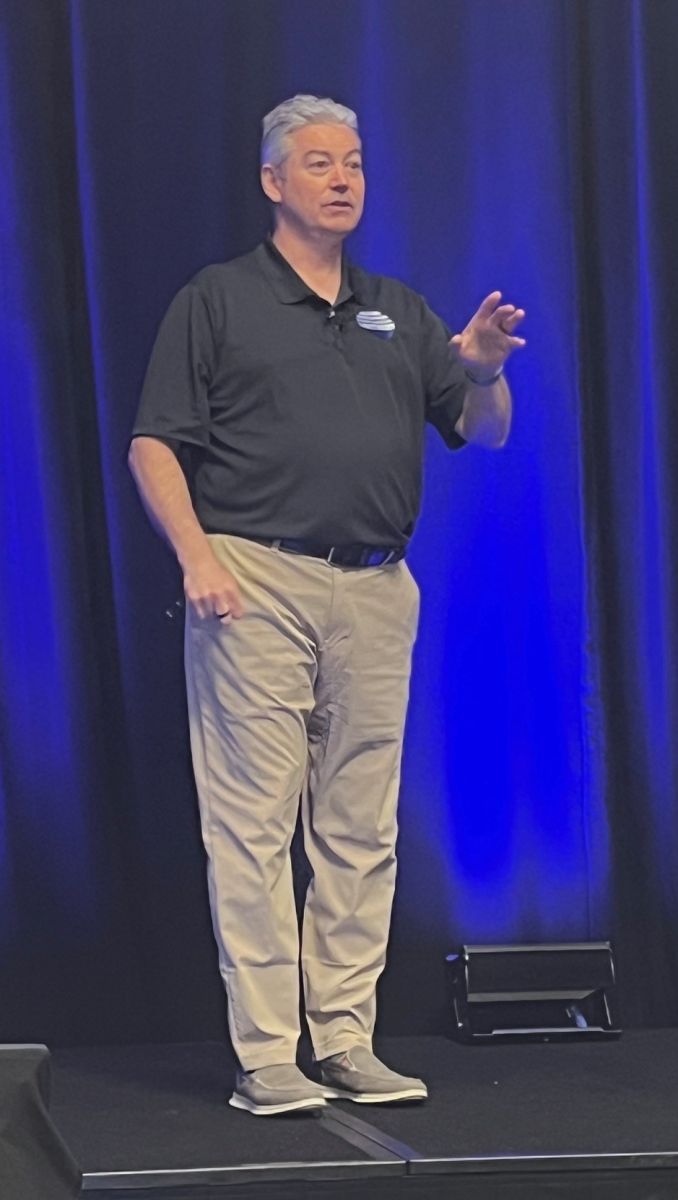
John O'Connell
Using prompts, and providing context and goals, O’Connell demonstrated in real time how a virtual advisory board of experts for an RIA could be assembled in less than half an hour ChatGPT and Claude. Asked by an advisor about the risks of having AI produce so much data, O’Connell said advisors should go back and ask the AI program to validate its data and cite specific sources.
According to Nitrogen chief product officer Justin Boatman, RIAs tech stack integration “will be table stakes” even among stand-alone tech providers as agentic AI proliferates. Even though custodians are likely to provide more and more software, there will be still be a place for quality best-of-breed vendors, Boatman said. “Yes, there is risk of disintermediation,” he said, “but it’s always been there.”
Context vs. slop
The problem of AI “slop,” generic, risky or off-brand output that creates more work than it saves, and “garbage in, garbage out” was addressed by Raj Madan, chief technology officer for software firm AdvisorEngine.
Context, Madan emphasized was critical. “Large language models are remarkably good at reassembling patterns from their training data,” he noted. “But without context, they remain probabilistic text predictors – not fiduciary-minded financial advisors.”
An LLM without context has no memory of your prior conversation, does not know your firm’s Form ADV, has not read your compliance manual and does not understand your fee schedule, Madan told advisors. “Every prompt is treated as a new, isolated event.”
The next AI evolution, he continued, “is not just better prompts, but an agentic AI system that can make decisions, execute sequences of actions, search databases, retrieve documents, trigger workflows and complete multi-step processes.”
But these new LLMs need context, Madan said, which can be attained by prompt engineering, retrieval-augmented generation and fine-tuning.
Prompt engineering, he explained, defines the role, constrains the output and tells the system exactly who it is supposed to be and what guardrails it must follow. RAG converts internal documents into embeddings – numerical vectors that represent semantic meaning. Fine-tuning re-trains a model on proprietary data so it behaves consistently in a specific way, but is typically unnecessary for most practices.
“For many firms, prompt engineering plus document retrieval unlocks the majority of value,” Madan said.