
Family offices and their ultra-high net worth principals are moving around the US and the rest of the world. But the trend is more complex than simply shifting from one place to another to manage tax more efficiently.
Proposed new levies in parts of the US – such as California – have shone a spotlight on how mobile people are, and how prepared they can be, when new taxes loom. California is probably the most visible example of where a proposed wealth tax has put the frighteners on UHNW wealth holders, but it’s not unique. In 2022, Massachusetts approved a 4 per cent surtax on annual income over $1 million.
Over the other side of the pond, the UK’s ending of a preferential tax regime for resident non-domiciled people – or “non-doms” – replacing it with a residency system with a tax holiday of four years, has encouraged some non-doms to leave the UK. Under the current Labour administration, inheritance tax – aka estate taxes – applies to worldwide income, encouraging many people who came to the UK in recent years to leave. On the flip side, the new residency system, which gives those coming to the UK a chance to avoid certain taxes if they’ve lived outside the UK for a decade, can appeal to expats returning to the country, or people such as Silicon Valley entrepreneurs looking to go abroad for a while.
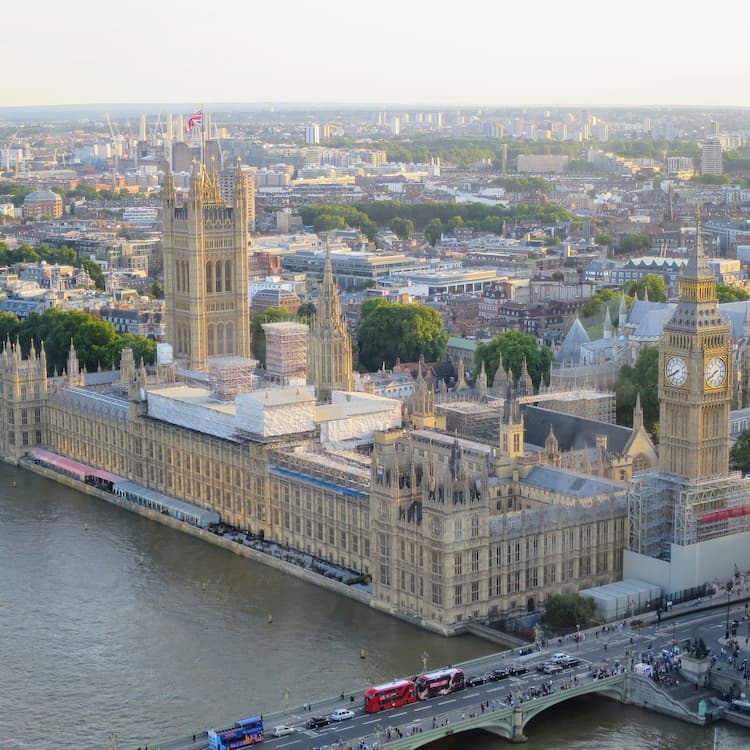
UK parliament
A point to note is that if Americans want to leave the US for different jurisdictions – maybe because of politics, economics, and culture as well as tax – they must remember that the Internal Revenue Service, unlike almost all other developed nations, taxes citizens on a worldwide basis. To avoid this, Americans have to renounce their citizenship – a step that some won’t want to take.
All this talk of taxes feeds into commentary about how footloose family offices can be in practice. Certainly, principals can move around, set up new offices and homes. Depending on an office’s size, non-family staff might remain in an original “hub.” All this change requires guidance and advice.
Mobile trend
“People forget that these are the most mobile people anywhere,” Paul Karger, founder and managing partner of $12 billion multi-family office TwinFocus, based in Boston, told this news service.
TwinFocus is a 20-year-old organization. The MFO looks after approximately 50 clients in total. About 75 per cent of whom are domestic US clients and the rest are international or have international ties.
Family Wealth Report talked to Karger about the proposed California wealth tax and proposed tax hikes and recent changes in Massachusetts, and how this fuels interest among families in moving where they live.
Karger said such wealthy individuals have been moving to states such as Florida and Texas. Famous examples include Google’s Larry Page, who has left California.
A proud Massachusetts man, Karger waxes lyrical about the state, but is rather less poetic about its taxes.
“Massachusetts is safe; it has excellent education, it is a great place to raise a family, there is lots to do…but the state has moved very politically to the left, the wealthy have been villainized, and the populace is focused on ‘taxing the rich’ with the new Massachusetts Millionaires’ Tax and among the highest estate taxes in the country,” he said. “Families are moving. It’s real and it’s happening.
“Historically, lots of foreigners have come into these places …but that is drying up,” he continued.
The potential hit from the California wealth tax, given that it is calculated by reference to the controlling stake that beneficial owners have in a business, could, as in the case of the Google founders, amount to hundreds of billions of dollars. “It is all happening in real time,” Karger said.

Sacramento state capitol
The impact of even a single-digit percentage of family offices moving around can be large, given how many there are. According to a 2024 report from Deloitte, there are an estimated 8,030 single-family offices in the world today – a 31 per cent increase from 6,130 in 2019. This number is projected to grow to 9,030 family offices by 2025 and 10,720 by 2030, marking a potential 75 per cent rise in just over 10 years. Collectively, they hold trillions of dollars and are important investors in areas such as startups, venture capital, private markets, hedge funds, as well as listed stocks and bonds. Family offices have become more visible – not always in a way that the sector finds comfortable when regulatory issues arise.
Generational forces
The rise of a younger generation can be as influential as grumbles about tax in deciding where family offices locate and change, argues wealth management firm Certuity.
“There has been a lot of mobilization of families; there is the rise of the NextGens; there is more information and communication flow between jurisdictions. We are becoming global,” Giuliano Celle, managing director and head of institutional wealth at Certuity, based in New York, told this publication.
“As families globalize, their operating structures follow. Many US-based family offices are establishing representative offices or local partnerships in Europe , Latin America, and parts of Asia, particularly Singapore – sometimes very lean, sometimes through trusted local teams,” Celle continued. “This supports cross-border direct investing, local sourcing, and governance oversight. It also reflects the fact that families today think globally by default, not opportunistically.”
A similar perspective comes from Europe.
Family offices sometimes move some – not all – of their staff, as well as family members, to be closer to where the hottest investment action is, and that’s not necessarily purely a tax consideration,” Stuart Pinnington, IQ-EQ’s global head of asset owners, based in Jersey, one of the Channel Islands and a UK Crown Dependency, told FWR. IQ-EQ provides much of the background fund and administration support that family offices look for, as well as advice on jurisdictional requirements. It has a ringside seat on who is moving around.
“Established offices in London are not moving to new jurisdictions…but branches and additional structures,” Pinnington said.
At Ocorian, Tracey Neuman, executive director, told FWR that having family members in a certain part of the world matters in ways that cannot easily be overcome, even in the jet age and era of the internet. As families expand, become more multigenerational, and spread out geographically, they need to consider the optimum place to base the main family office, she said.
For example, if a family has several members in North America and others in Asia, that forces a decision. “Some time zones just don’t work,” Neuman said.
Teddy bear test
“Massachusetts is the most incredibly expensive state in the country; it is expensive to build here, and it is becoming incredibly unaffordable. The mayor in Boston is trying to impose rental controls,” Karger said.

Massachusetts state house
Leaving the state is not straightforward: a person must prove to the state that they have made a bona fide move, such as living in another state for more than 181 days, moving doctors, schools, driver’s licenses, actual residences, etc, he continued.
“Often, we tell clients that taxing authorities are focused on the ‘teddy bear test’ – where do you keep your teddy bear? Or, better said, where do you keep your valuables, celebrate holidays with family, etc.,” Karger said.
FWR asked what’s happening with single-family offices.
“They are moving. The bar has moved up in terms of the size you need to be. In the old days, if you had $100 million-plus, it perhaps made sense to have your own single-family office. Now, given firms like ours, the threshold has increased given the cost efficiencies of using an outsourced advisor,” Karger replied.
He noted that in considering some of the issues affecting how mobile a family office can be, one has to consider whether all the wealth of a family is in liquid assets or includes operating companies.
It is possible, for the moment, for those in Massachusetts to set up out-of-state trusts – known as self-settled out-of-state trusts . These are trusts established by a Massachusetts resident in a state that allows self-settled trusts . In limited circumstances, it may be possible to transfer assets to such a trust, sell those assets within the trust, and defer or avoid a Massachusetts capital gains tax if the trust is properly structured, administered entirely outside Massachusetts, and the proceeds are not distributed to or used for the benefit of a Massachusetts resident.
However, this strategy is not risk-free. Massachusetts tax authorities may challenge the arrangement under residency, source-income, or substance-over-form principles, particularly if the settlor retains control or beneficial enjoyment, or if the trust has meaningful connections to Massachusetts. Outcomes are highly fact-specific, and future legislative or administrative changes could limit or eliminate this planning opportunity.
Ecosystem
The reason why the movement of family offices is increasingly important as a financial story is because they have built ecosystems that in some ways run in parallel with those of investment banks, said Certuity’s Celle.
Celle agreed with the notion that to some extent groups of family offices are filling a vacuum caused by the partial retreat of investment banks from some sections of the investment and financing landscape. “They have disintermediated large institutions,” he said.
“Family offices have an ability to be nimbler,” he added. “We are partnering with other single-family offices and multifamily offices on opportunities.”
FWR talked to Celle about how family offices have more freedom to decide on private market investments than large pension funds, for example.
“It’s not that family offices won’t invest with large, top-tier private equity managers; many still do. What has clearly changed is that family offices are increasingly diversifying away from sole reliance on large PE platforms and building their own direct deal networks and co-investment ecosystems. That includes partnering with other family offices, backing emerging managers, and executing proprietary or club deals where they retain more control, alignment, and transparency,” he said.
One trend within all this has been the migration of money to Florida, to give one example. About a week ago, Wells Fargo, the San Francisco-headquartered bank, said that its wealth management business is moving some of its senior team to West Palm Beach. The bank said “several senior leaders are relocating to the area, strengthening our local leadership presence, and deepening engagement with clients in this high-opportunity market.”