


Investment Strategies
US Fed Tightens Monetary Policy: Wealth Managers' Responses
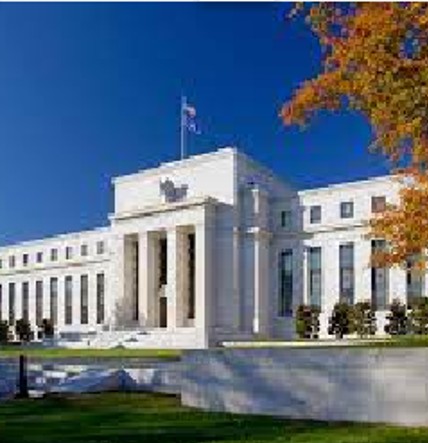
The central bank hiked rates yesterday and, just as notably, its rate-setting committee did so unanimously. We take views from wealth managers about the Fed's move and its strategy.
Under its recently-appointed chairman, Kevin Warsh, the US Federal Reserve tightened monetary policy yesterday, raising its target range used to set rates by 25 basis points from 3.75 to 4.0 per cent. The rate-setting Federal Open Market Committee voted unanimously to hike rates.
Sticky inflation, some of which is underpinned by rising energy prices, helped prompt the central bank to act.
We carry these reactions from wealth managers:
UBS Global Wealth Management
Updated projections indicate that most policymakers expect at
least one further increase this year. This backdrop may keep US
real yields and the dollar elevated, increasing the opportunity
cost of holding non-yielding gold and creating further near-term
volatility for the yellow metal.
Gold exchange-traded funds recorded solid inflows in August amid concerns about Fed independence and rising debt levels. In the near term, however, some of these holdings could see outflows following the meeting’s perceived hawkish hike.
However, the rate decision and the prospect of further hikes are widely anticipated by market participants, and tighter policy does not invalidate gold’s longer-term investment case, in our view. Rising global debt levels, our expectation of a weaker US dollar over time, and the likelihood of Fed rate cuts next year should support investor demand for gold. Together with elevated geopolitical uncertainty, these factors should provide a favorable medium-term backdrop for the yellow metal.
Brad Conger, chief investment officer at Hirtle &
Co
Today’s FOMC could mark the moment when the FOMC regained a
measure of spine. There were many arguments for standing
still. But for once, the committee sided with main street.
Inflation is a pervasive concern, and its uncertainty is impeding
decision-making among all businesses.
One swallow doesn’t make a [summer] spring, but we might have just caught a glimpse of Volckerian decisiveness as opposed to the eternal sycophancy of the [Jerome] Powell era.
Salman Ahmed, global head of macro and strategic asset
allocation at Fidelity International
If the Fed’s forecast is broadly right, the US will have spent
roughly eight years with inflation above target before price
stability is restored. That is closely aligned with the regime
embedded in our long-term capital market assumptions, where we
have for some time expected inflation to remain more persistent
and to settle above the norms investors became accustomed to
after the global financial crisis.
The point is not simply that inflation is taking longer to fall. The structure of the economy has changed. Geopolitical fragmentation, energy security, larger fiscal footprints, supply-chain duplication, and the capital intensity of the AI investment cycle all point toward a world in which inflation is likely to remain more persistent.
The Fed’s own projections are increasingly acknowledging that reality. Warsh’s press conference was also hawkish and broadly consistent with his Jackson Hole message. He also said the Fed had removed a dose of accommodation, implying that he still sees rates as below short-term neutral. Inflation remains too high, and the Fed needs clearer evidence that it is moving toward target at sufficient speed. Until then, the bias remains toward tighter policy.
There was still no conventional forward guidance. But compared with July, the reaction function is easier to read. Inflation remains above target, activity is resilient, and capital spending is strong. Unless that combination changes, further tightening remains on the table.
Ron Temple, chief market strategist at Lazard Asset
Management
“Today’s rate increase was an easy decision for the Fed, with US
inflation above the 2 per cent target for over five years and the
labor market at full employment. Another hike before year end
appears to be a done deal too, but with ongoing geopolitical and
energy price uncertainty emanating from the Persian Gulf, the
2027 policy outlook is murkier.
Richard Carter, head of fixed interest research at
Quilter Cheviot
For the first time in more than three years, the Federal Reserve
has unanimously voted to raise interest rates, as the conflict in
the Middle East takes its toll on the American economy. This move
higher had been coming and the Fed arguably held it off for as
long as they could. However, with energy prices taking a renewed
step higher and inflation remaining persistently well above
target, it was inevitable that the central bank would need to
take this step.
This is a pivotal moment for Kevin Warsh too. He was brought into the Fed as Trump’s guy, poised to deliver the rate cuts he so desperately wants. However, his first move of significant impact is in fact an interest rate rise, and this risks hampering the relationship between the two and thus a repeat of the barbs Jerome Powell suffered during his tenure. Warsh will be hoping this action is swift, although energy prices are ultimately what is driving inflation right now rather than what is going on within the US economy.
Indeed, going forward the Fed will want to see tensions in the Middle East calm significantly and for a considerable period of time before it can start to look past this inflation spike. Inflation in the US has refused to come back down to target ever since the pandemic and today’s decision confirms that we are very much in a higher-for-longer period. For now, Warsh is backing up his words that the Fed has “work to do” on inflation, but soon he will need to consider how long this work is likely to take.