


Family Office
The Strategic Edge Of Family Offices In A Long-Cycle Market
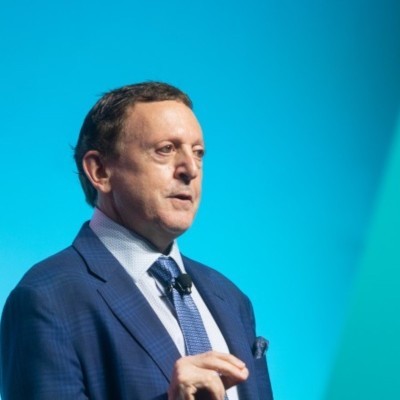
Family offices, as they develop and use peer networks, are becoming significant investment platforms. They carry particular strengths in area such as the middle market, the author of this article contends.
A prominent figure in the world’s family offices sector, Ronald Diamond (pictured) is well placed to give his views on why these institutions are well placed to gain an edge when there is a demand for patience over the medium term and through the gyrations of the business cycle. The editors are pleased to share these views; the usual editorial disclaimers apply to views of guest contributors. Please comment and join the conversation. Email tom.burroughes@wealthbriefing.com and amanda.cheesley@clearviewpublishing.com
The strategic edge of family offices in a long-cycle market
Capital is concentrating around control of decisions, continuity of ownership, and the freedom to compound across full market cycles. This gives family offices, which operate with long-duration capital, unified authority, and the ability to pair ownership with sustained operational involvement, a defined advantage.
This shift favoring family offices is driven by structure, scale, and capability. Families deploy capital without artificial timelines. At the same time, a historic $124 trillion wealth transfer is expanding balance sheets and decision-making power, while advanced operating tools, including AI, now give lean teams the ability to perform at institutional depth. Together, these forces are changing how capital is sourced, priced, governed, and held.
Yet advantage alone does not guarantee outcomes. Winning requires family offices to operate with the same rigor as the firms they now compete against. Governance must be explicit. Talent must be treated as an investment. And technology must be embedded into daily decision making rather than bolted on as an accessory.
Moving from capital to capabilities
Family offices collectively control roughly $10 trillion, a pool that exceeds the global hedge fund industry. Scale, however, does not automatically equal readiness. Those with capital alone remain dependent on external managers. Those who build capability capture the returns.
Time horizon and alignment also offer a competitive edge.. Institutional private equity is built around fund mechanics that prioritize realizations within defined windows. Families can own operating businesses across decades, allowing cash flow, culture, and operational improvements to compound without repeated transaction costs or forced exits. When holding periods stretch longer, underwriting changes. Value creation replaces financial engineering as the primary driver of return.
Execution remains the gating factor. A small cohort of families has institutionalized to a level that allows direct competition with global platforms. The majority have not. Without scale, process, and properly aligned teams, many default to limited partner roles, absorbing liquidity risk while paying full fees. According to Citi's 2025 Global Family Office Report, seven in ten family offices made direct investments in private companies over the past twelve months, with twice as many reporting they increased that exposure as decreased it. Yet the same data shows the gap between those with genuine operating infrastructure and those without is widening — 44 per cent of U.S. family offices cite understaffing as a significant bottleneck for their direct investing programs. The opportunity is well understood; the capability to capture it is not equally distributed.
Transitioning from passive allocator to direct investor requires a minimum operating foundation predicated oneal sourcing, diligence, portfolio oversight, and trusted partnership networks that deliver strategic value at the firm level.
But it’s not just operational rigor that is essential, talent strategy is also central. Competitive family offices view senior investment hires as future profit centers rather than overhead. Compensation now includes long-term participation through carried interest, credit facilities, and structured incentives tied to multi-decade outcomes. When leadership wealth compounds alongside family capital, alignment becomes structural rather than aspirational.
Technology as a force multiplier
Technology accelerates this transformation but does not replace the judgment behind it.AI-driven systems now allow a few investors to evaluate thousands of opportunities against explicit criteria, surface comparable data, and maintain disciplined decision frameworks that reduce emotional drift. Better data creates sharper market intelligence. Pricing trends, margin pressure, and sector dynamics become visible earlier. Human judgment remains essential, yet its leverage increases dramatically when paired with machine-enabled scale.
The appetite is already there. Nine out of ten family offices believe AI could enhance investment returns, and half have already begun experimenting with it Bank of America, according to Bank of America's 2025 Family Office Study. Meanwhile, Deloitte found that private equity allocations among family offices rose from 22% in 2021 to 30% in 2023 — with private equity now overtaking public equity in portfolios for the first time Asset Vantage — a structural shift that AI-enabled diligence and deal sourcing is only likely to accelerate.
Even so, strategy remains the foundation. Families win when capital brings more than funding. Operating expertise, industry credibility, and real commercial advantage often outweigh headline valuation. In segments where large funds face deployment pressure, disciplined families can underwrite patiently and focus on long-term value creation rather than transaction velocity.
That long-term orientation carries through to the next generation of leadership. Younger principals tend to be fluent in technology, comfortable with transparency, and focused on outcomes measured across decades. Impact and return are more frequently sitting within the same decision framework rather than separate silos. That orientation aligns naturally with patient capital and long-duration ownership.
Real risk, real opportunity
Even as family offices have the advantage to excel in today’s market, the risks are real. Concentrated authority, unclear decision rights, and thinly resourced teams can stall progress. Liquidity constraints emerge when distributions slow, and direct investing demands exceptional operators who remain scarce and expensive.
The trajectory, however, is unmistakable. As family offices codify investment criteria, professionalize governance, adopt AI-enabled workflows, align incentives, and collaborate through peer networks, they are becoming repeatable investment platforms. Large asset managers will adapt and partner.
In the middle market especially, capital that can hold longer,
contribute more, and exit on its own terms is starting to win.
Not quietly. Systematically.
About the author
Ronald Diamond founded and is chairman of Diamond Wealth, a syndicate of more than 100 family offices ranging in size from $250 million to $30 billion, with whom he has invested for over 20 years. The firm focuses exclusively on private markets, including private equity, real estate, venture capital, crdit, and special situations.
Diamond is also founder, host, and CEO of Family Office World Media, a platform that fosters collaboration, innovation, and resource sharing for family offices. He helped to create the Family Office Program for TIGER 21, where he served as chair for a national family office group.
He also sits on the advisory board and steering committee for the University of Chicago Booth School of Business Family Office Initiative and has taught family office courses at Oxford, Stanford, Harvard, and the University of Chicago Booth School of Business. Diamond was recently appointed editor-in-chief of The National Law Review’s first newsletter dedicated exclusively to family offices and is a member of the Leadership Circle at the Aspen Institute. Earlier in his career, he founded Pinnacle Capital, a $250 million hedge fund, and held leadership roles at Bear Stearns and Drexel Burnham Lambert.