


Alt Investments
Oil And Gas As A Real Asset Strategy

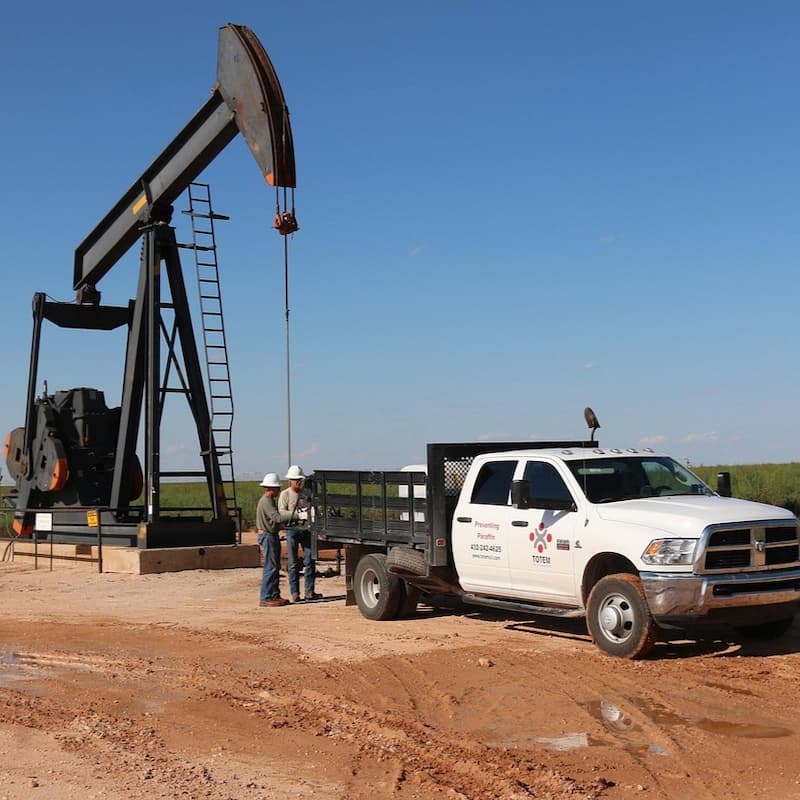
This article explores the benefits to HNW individuals of investing in oil and gas to produce cash flow and downside protection in a tax-efficient manner.
The following commentary comes from Dax Atkinson (see below this article for his biography, and photo). He serves as chief investment officer of Rockport Companies. The editors are pleased to share this material and we hope it stimulates conversations. To comment, email tom.burroughes@wealthbriefing.com and amanda.cheesley@clearviewpublishing.com
Real assets remain an important part of diversified portfolios, offering inflation protection, income generation, and tangible value that traditional financial assets cannot easily match. Within this category, investors often focus on real estate and infrastructure – but oil and gas, when managed with discipline and operational control, can provide a unique mix of steady cash flow, tax efficiency, downside protection, and long-term wealth preservation. Oil and gas also remain the backbone of modern society, supporting transportation, manufacturing, agriculture, logistics, and national security. Demand is structurally resilient, and the inventory of high-quality oil and gas assets has continued to shrink, creating scarcity value for select projects that remain attractive and worth developing.
The Rockport Energy Fund applies this model by turning upstream oil and gas projects into high-quality, income-producing real assets. Through strong operating expertise and an institutional approach to capital allocation and risk management, the fund seeks to convert well-designed oil and gas projects into durable cash flow and long-term value for investors.
Reframing oil and gas as a real asset, not a commodity
bet
Many investors still view oil and gas through the narrow lens of
commodity price speculation. Upstream oil and gas
– particularly when structured around development-ready,
lower-risk projects – has more in common with infrastructure
or real estate than with short-term trading. Successful wells
generate predictable, repeatable cash flows once on production,
with decline curves and operating costs that can be modeled with
remarkable precision. Particularly when sufficient subsurface and
offset data exists, underwriting becomes a statistical exercise,
allowing well results to be modeled mathematically with
probability-weighted outcomes guiding expected performance. These
assets are grounded in geologic reality, reservoir physics, and
engineering principles, not market hype.
A real asset strategy emphasizes durability, yield, and capital
preservation. Upstream projects, when executed by a capable
operator with technical and financial discipline, provide:
-- Inflation-linked income, directly tied to real-world
demand for energy;
-- Tangible intrinsic value in the form of reserves and
producing wells;
-- Stable, multi-year cash distributions with hedges
protecting cash flows and an asset that is
self-liquidating;
-- Tax-advantaged returns, particularly through intangible
drilling costs (IDCs) and depletion;
-- Low correlation to traditional financial assets; and
-- Potential for upside capital appreciation through
commodity price increases and discount rate compression.
Rockport’s vertically integrated model, track record of success, and drill-ready inventory sharpen these advantages and make the strategy accessible to institutional and sophisticated private investors who demand governance, transparency, and repeatability.
Rockport’s position in the real asset
landscape
Rockport Energy Partners has a track record of operating across
the full lifecycle of upstream development – sourcing,
engineering, operating, and monetizing projects. This vertically
integrated structure provides unique control and visibility over
project economics, allowing Rockport to systematically reduce
risk and enhance value. Rockport focuses on development-ready,
lower-risk, self-liquidating oil and gas projects with
line-of-sight to early cash flow.
The Fund’s design fits squarely within the goals of real asset investing:
1. Income generation and current yield
Producing oil and gas wells creates immediate and ongoing cash
flow. Rockport’s development program targets three-year paybacks
with meaningful yield beginning shortly after wells come online.
These distributions, protected by commodity hedges, resemble
rental income in real estate or toll income in infrastructure
– steady, real-world cash flow tied to essential services.
2. Inflation protection
Energy prices are inherently linked to inflation. As the cost of
goods and services rises, so does the value of energy and the
revenue streams from hydrocarbon production. In contrast to bonds
or equity income strategies vulnerable to interest-rate cycles,
oil and gas revenues maintain purchasing power during
inflationary periods.
3. Tangible, intrinsically valuable assets
Reserves in the ground and producing wells are physical,
measurable, and appraisable. They cannot be digitally diluted,
and their value is tied to long-term, essential-use demand. These
assets represent commodities stored in the ground and embody the
core real-asset principle of durable, intrinsic value.
4. Diversification and low correlation
Upstream oil and gas returns are fundamentally different from
equities, fixed income, or private credit. Their correlation to
traditional markets is low, and their return drivers
– geology, engineering, reservoir quality, and operating
efficiency – are unique. Because wells generate high current
yield and naturally self-liquidate as reserves are produced, the
asset class reduces reliance on future exit events. This makes
oil and gas an attractive diversifier within a real asset sleeve.
The Rockport Energy Partners advantage: Institutional
discipline, technical rigor, and operational control
Rockport is not a financial sponsor outsourcing operation. It is
a veteran-owned, vertically integrated operator and asset manager
with decades of experience in drilling, completing, and operating
wells on behalf of institutional investors, family offices, and
private equity firms. This operational DNA transforms upstream
assets into dependable real assets.
1. Proprietary, drill-ready inventory
Rockport has a significant pipeline of drill-ready opportunities.
These are not speculative wells; they are engineered, derisked,
and ready for development with geological, operational, and
midstream considerations fully vetted.
2. Development over exploration
Rockport’s projects are structured around development, not
exploration. Exploration creates binary risk; development creates
recurring cash flow. Rockport’s projects are characterized by
proven reservoirs, existing well control and extensive subsurface
data, clear visibility into type curves and decline profiles, and
established takeaway infrastructure. This enables consistent
underwriting and predictable outcomes.
3. Tax efficiency through IDCs
Upstream real assets also offer meaningful tax efficiency.
Intangible drilling costs flow through to investors as immediate
deductions, which can materially enhance after tax returns. This
makes upstream oil and gas among the most tax-efficient real
asset classes available.
4. Risk management through technical
excellence
Rockport’s approach focuses on realistic production assumptions,
strong engineering standards, and tight control over costs. Every
project is budgeted carefully with built-in cushions for
unexpected expenses. We also use hedging tools to help stabilize
the first years of cash flow. The portfolio is spread across
different regions and project types to avoid concentration risk.
Altogether, this disciplined model lowers risk and supports
steady, predictable returns.
Conclusion: Rockport’s blueprint for a dependable real
asset allocation
Rockport reframes oil and gas investing from a speculative
exercise into a disciplined, repeatable, real-asset strategy. By
focusing on drill-ready development, engineering excellence,
operational control, and institutional quality capital
allocation, Rockport delivers the attributes investors seek in
real assets.
About the writer

Dax Atkinson’s 25 years’ industry expertise spans sourcing,
structuring, and managing complex investments across private
equity, distressed credit, and real assets. Atkinson served
as chief financial officer of Independence TX LLC, a family
office with holdings in the energy services industry. Before
joining Independence TX, he spent over six years at Castlelake LP
as managing director in the Special Situations Group, where
Atkinson managed the firm's oil and gas portfolio. Earlier in his
career, he held senior investment roles at CarVal Investors LLC
and Deephaven Capital LLC, where he focused on distressed credit
and special situations across multiple sectors, including oil and
gas exploration, energy services and shipping. Atkinson began his
career in investment banking at Piper Jaffray, where he supported
M&A and capital markets transactions for financial
institutions. Atkinson holds a bachelor of science with
distinction and honors in finance from Iowa State University and
is a CFA charterholder.