


Tax
New York City’s New Pied-à-Terre Tax – Unresolved Questions
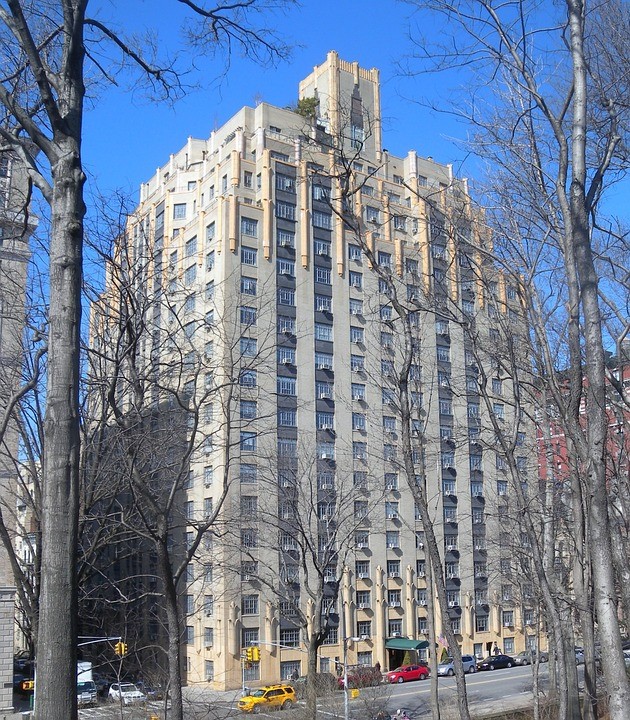
The luxury second-home tax in New York City is raising questions and a web of technical ambiguities for HNW individuals and the real estate sector, the authors of this article argue.
A new tax on what are deemed to be luxury second homes is now in force in New York City. Already, the tax has caused controversy due to a data list of properties, entities and people that City Hall released a few weeks ago, as analyzed by this news service’s editor.
Max Biedermann (pictured below), a tax attorney with McDermott Will & Schulte, and colleague Michael Hilkin (pictured below), who is a state and local tax partner, examine what property owners and advisors should consider.

Max Biedermann

Michael Hilkin
The authors argue a number of points: Major uncertainty remains over how ownership through LLCs, trusts, and corporations will be handled, and whether these structures can legally be deemed a primary residence to avoid the tax; the tax outlines two different phases that use entirely different valuation methodologies, creating a compliance headache for property tracking; co-op owners and boards have little information on how this surcharge will be allocated among individual shareholders.
The editors are pleased to share these insights and the usual editorial disclaimers hold for outside contributors. To comment, email tom.burroughes@wealthbriefing.com and amanda.cheesley@clearviewpublishing.com.
On April 15, 2026, Governor Kathy Hochul announced a pied- à -terre tax aimed at “luxury second homes” in New York City worth $5 million or more. The Governor framed the tax proposal to help close the city’s budget gap and support Mayor Zohran Mamdani’s agenda. Despite the fanfare, the actual mechanics of the tax were not revealed until final budget legislation passed nearly six weeks later and, even now, with the tax having taken effect on July 1, 2026, significant legal and administrative uncertainty remains.
Background: The idea of a pied- à -terre tax is not new. Legislation introduced in 2014 proposed such a tax with graduated rates from 0.5 per cent to 4 per cent on non-primary residences valued over $5 million. The proposal gained momentum in 2019 only for it to collapse weeks later after opposition from the real estate industry. This year’s version emerged suddenly from closed-door negotiations, without appearing in any earlier budget proposals from the Governor or legislature.
New York is not alone in implementing a pied-à-terre tax in 2026. Rhode Island passed a similar “non-owner-occupied property tax” last year, which was also effective on July 1, 2026. While the laws are similar in many respects, the Rhode Island bill provides an exemption for properties rented for 183 days or more annually.
How the tax works: The law applies to one to three family homes,
co-ops, and condos exceeding certain values, unless classified as
a “primary residence” of:
1. An owner of the property;
2. An “immediate family member,” defined as “a spouse,
child, sibling, parent, grandparent, or grandchild” of an owner
of the property; or
3. A lessee or sub-lessee “pursuant to a bona fide lease
agreement negotiated in an arms-length transaction with a term of
not less than one year.” (1)
Co-ops and condos face a two-phase implementation:
-- Phase one, which applies for fiscal years 2026–2027, uses
existing city property tax roll valuations; and
-- Phase two, which applies for fiscal year 2028 and beyond,
shifts to a true fair-market valuation system, applying the same
rates then used for one to three family homes.
During phase one, co-ops and condos with a taxable value of at least $1 million will be subjected to the pied-à-terre tax at the following rates:
-- For properties valued between $1 and $3 million, equal to
4 per cent of the taxable value;
-- For properties valued greater than $3 million but less
than $5 million – 5.25 per cent of the taxable value;
and
-- For properties valued greater than $5 million, or 6.5 per
cent of the taxable value. (2)
Meanwhile, during phase 1-3 family homes with a taxable
value of at least $5 million on the New York City property tax
rolls will be subjected to the tax at the following rates:
-- For properties valued between $5 million and $15 million
– 0.8 per cent of the taxable value;
-- For properties valued greater than $15 million but less
than $25 million, equating to1.05 per cent of the taxable value;
and
-- For properties valued greater than $25 million, 1.3 per
cent of the taxable value. (3)
During phase 2, all taxable residential properties will be subject to the same tax rates applicable to one to three family homes during phase one of the tax.
Planning considerations and uncertainties
1. Entity and trust ownership. The statute
provides primary-residence exclusions when properties are held
through trusts or entities, but only if beneficiaries or owners
meet narrow conditions.
-- For trusts, a property will be excluded from the tax if
the property is the primary residence of the sole beneficiary or
beneficiaries of the trust. New York Department of Finance
regulations recently clarified that contingent or future
interests in a trust held by a person will not be considered for
purposes of determining whether other persons are beneficiaries
of a trust.
-- For partnerships, corporations, or limited liability
companies, the property will be excluded from the tax only if the
majority of the owners of the entity use the property as a
primary residence. Ownership interests of residents of the
residence can be aggregated for these purposes.
The New York Department of Finance has stated that an individual cannot establish primary residency through a multi-tier business entity ownership structure. This means that layered structures such as a trust holding a residence through a limited liability company may not qualify for an exclusion even if the residence is the primary residence of the trust’s sole beneficiary.
2. Defining “primary residence.” The law leaves this determination largely to the New York Department of Finance’s discretion, with the strongest weight being given to whether the address appears on a state or federal tax return of the owner or resident, followed by factors such as majority-of-year occupancy, prior city filings, ID cards, and voter registration. The law creates a tension with New York’s existing “statutory residency” rules, under which someone can be taxed as a New York City resident based on owning a home and spending 184 or more days there. It is possible that someone who is considered a statutory resident for tax purposes would not qualify as using the property as his or her “primary residence” for purposes of determining whether the pied-à -terre tax applies. This seemingly is contrary to the Governor’s stated goal of taxing only those who do not already pay city income tax.
3. Co-op mechanics. Because the co-op property tax is assessed at the building level rather than per unit, the co-op corporation itself must pay the pied-à-terre tax and then collect reimbursement from the shareholders whose units triggered it. Board members are already raising concerns about co-ops being stuck paying for units wrongly flagged as taxable, insufficient cash on hand if shareholders do not reimburse the co-op promptly, and valuation problems since share counts do not necessarily reflect a unit’s true market value (e.g. identical share allocations for units on different floors). There will most certainly be some growing pains for co-ops as the tax rolls out.
Bottom line: The New York Department of Finance must issue initial tax determinations by August 30, 2026. With only a 30-day appeal window being available to property owners, the authors urge anyone potentially subject to the tax to begin preparing documentation to substantiate an appeal position immediately. For future fiscal years, it may also be possible to restructure existing trusts and entity structures to prevent the application of the tax.
Footnotes
1, N Y C Admin. Code §11-3201 (definition of “Primary
residence”). This means that, unlike in Rhode Island, short-term
rentals cannot collectively cause a property to be excluded from
the tax.
2, NYC Admin. Code § 11-3204(a).
3, Id