


Investment Strategies
Morningstar Investment Conference Reflects Tumultuous Year
Our US correspondent reports from Chicago about the highlights of this year’s discussions and presentations, held against a background of geopolitical nerves, AI dramas and market shifts.
Morningstar’s annual Investment Conference reflected the tumultuous first half of 2026, with roiling geopolitics, a resilient US economy and the dramatic rise of artificial intelligence and private markets all commanding attention, along with a farewell keynote – and tips – from one of the most successful stock pickers in recent history.
Noted historian and commentator Walter Russell Mead, a distinguished fellow at Hudson Institute, took issue with Chinese president Xi Jinping’s contention that the US and China were headed towards a “Thucydides Trap” that portends an inevitable clash between a rising power challenging an established one.
The viewpoint that China was now the equal of the US and destined to exert hegemony over Asia is “unrealistic,” according to Mead. While risks posed by China are real, China’s strength is exaggerated and Asia is too big a sphere for China to dominate, Mead contended.
He pointed to the critical role India needs to play in the region, aligned with the US, and the political and cultural complexities of the world’s most populous country. Conflict is not inevitable, Mead said, maintaining that there is a “real path to peace” in Asia.
“Best fundamentals”
Pramod Atluri, fixed income portfolio manager at Capital Group,
was similarly upbeat about the “resilient” US economy, which
features the “best fundamentals” Atluri said he’s seen in 30
years. “Everything works quite well,” he said, forecasting “quite
a positive year ahead.” Ivor Schuking, global head of investment
grade credit research at Vanguard, also saw “no signs
of a recession,” but cited “rate volatility” as the biggest risk
to the credit markets.
Morningstar senior US economist Preston Caldwell and head of fixed income and currency research Hong Cheng expressed confidence in an economy driven by AI spending and equity gains, noting that the commercialization of artificial intelligence has surpassed that of the internet at a similar stage of development.
Long-term, however, “the big unknown,” Cheng said, is whether AI’s impact will result in a productivity boom of realized gains or a disappointing capital expenditure bust.
“Real barriers to entry”
There’s no doubt that artificial intelligence is setting “a
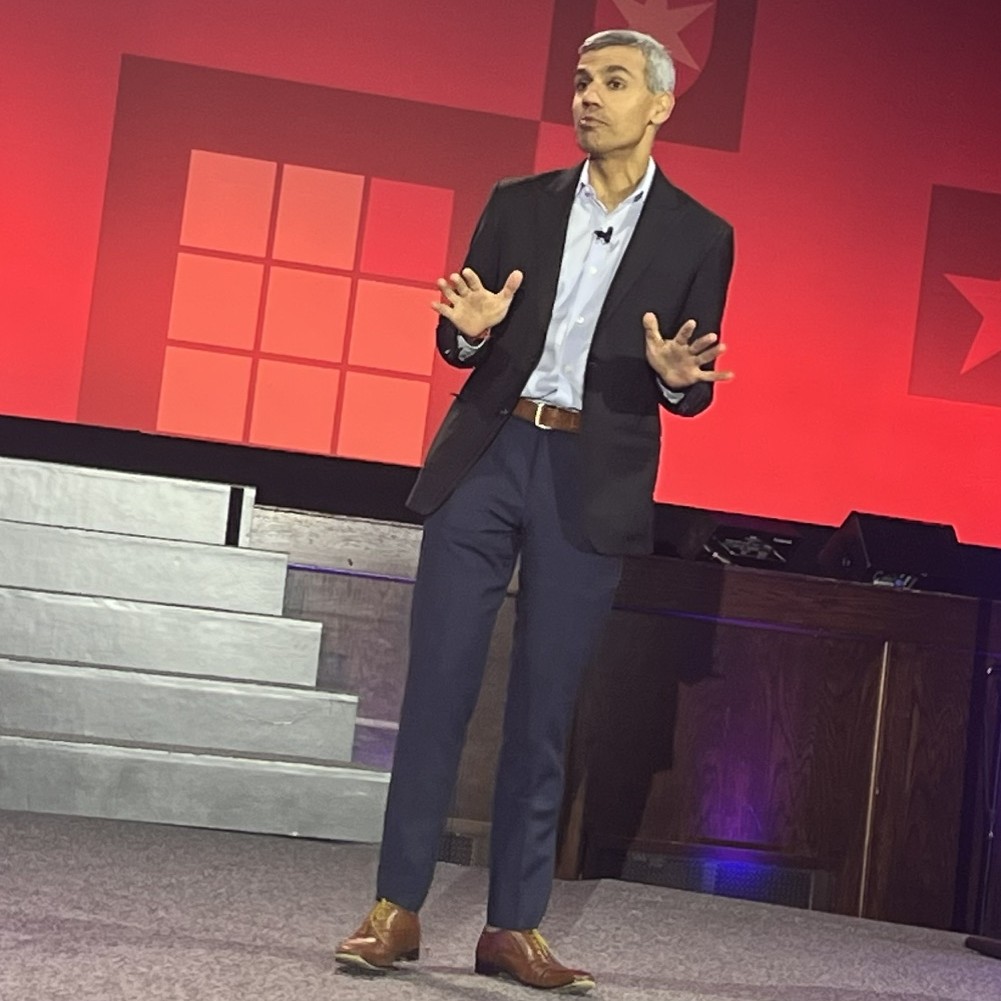
higher bar for advice,” said Morningstar CEO Kunal Kapoor (main
picture), empowering clients “to be more prepared than ever.”
While AI is good at what Kapoor called “first order questions”
such as allocation performance, it isn’t replacing an advisor’s
judgment, which, he said, is where their value lies. “What
happens when conditions change? Or when portfolios outgrow their
tax structures? These are judgements an advisor can provide,”
Kapoor said.
As for AI companies themselves, Vanguard senior equity analyst Malik Khan made the case that the industry leaders including OpenAI, Anthropic, Meta, Amazon, Oracle, Alphabet and Microsoft have been able to build sufficient “moats” around their businesses to ward off new competitors.
Khan cited “real barriers to entry” to AI, such as massive upfront costs to train large models, volume discounts for gigawatt-scale capacity, ability to pay for talent to build their own silicon chips. What’s more, the costs for “frontier models” incumbents are going down, but their pricing has remained the same, allowing profits to rise.
Danoff’s tips
The conference’s afternoon keynote was given, appropriately, by
Will Danoff (pictured below), the longtime portfolio manager of
Fidelity’s Contrafund, one of the most successful active managers
of all time who is retiring at the end of the year. Danoff
credited much of his success to his extensive research team, hard
work, asking questions, reading and practicing “MWBA” –
management by walking around.
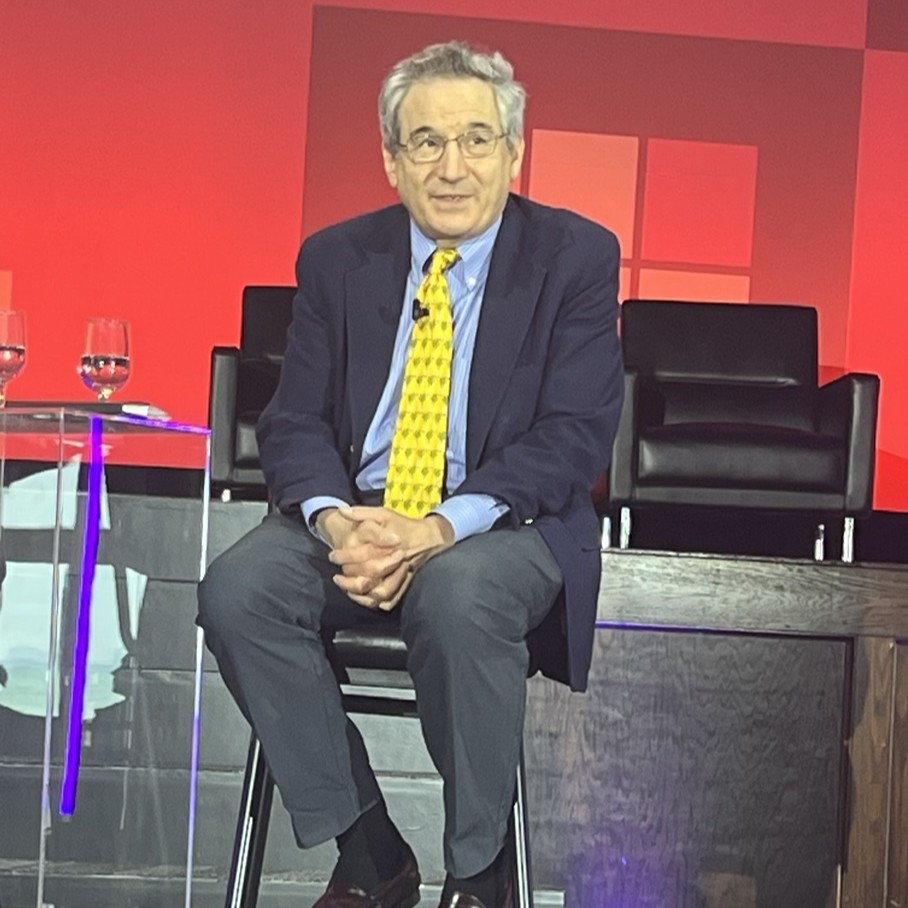
Will Danoff
Danoff said he averages about five manager meetings a day. “When you are looking where other people aren’t you can find opportunities,” he said.
After the Contrafund reached $100 billion in assets (it now has over $200 billion) Danoff says he asked Warren Buffet for advice managing a big fund. Buffet said he had one really good idea every year or two, and when he did, he acted on it by betting big.
Another mentor urged him to keep an investment journal articulating the reasons why he bought each stock and to review them to avoid “thesis creep.” Other lessons: ask every day what are the risks that could lose clients’ money and don’t be afraid to hold on to a favorite stock after a big runup.
His criteria for a successful fund manager? “The person, their process and performance.”
(Editor's note: To see our correspondent's account of conference discussions around private credit, see here.)