


Company Profiles
Looking At All Sides Of UHNW, Family Office Security
.jpg)
We talk to a figure with experience in law enforcement as well as the commercial sector about ways of addressing physical and cybersecurity threats to family offices, UHNW individuals, business leaders, and more.
For ultra-high net worth individuals seeking answers for physical and cybersecurity risks, a person who used to work for the Manhattan District Attorney’s office, and with a law enforcement background, seems a good fit.
And as risks continue to swirl, the kind of advice Jordan Arnold (pictured below) gives is very much in demand, so he says.
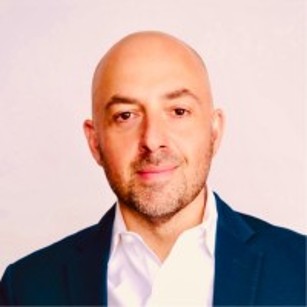
Jordan Arnold
Arnold is the founding principal and CEO of Jetty Partners, where he now works. Arnold led led the creation of the Manhattan DA’s Financial Intelligence unit and has investigated and prosecuted homicide, kidnapping, extortion, stalking, bank robbery, art crime, and thefts. And that experience serves him well in counseling ultra-HNW individuals and family offices, as well as executives of funds, asset managers, and private and publicly held companies. A certified mediator, Arnold is a member of the International Institute for Conflict Prevention & Resolution and holds a certificate in mediation from Harvard Law School’s Program on Negotiation.
With security an ever-present concern – and a subject this news service has examined – businesses such as Jetty Partners have an important role. Artificial intelligence has also created new vulnerabilities – as well as some answers.
“I believe the most significant and growing threat is the one that cuts across both cyber and physical domains: the sheer volume of personal information now available online and the ease with which it can be weaponized,” he told Family Wealth Report in an interview. “Home addresses, family details, travel patterns, property records, and public affiliations create visibility that can make families more vulnerable to being watched or targeted.”
“That same real-world visibility – events attended, transactions completed, assets acquired – can draw financially-motivated actors who then pivot to digital tactics such as account compromise or extortion. AI only accelerates this cycle, enabling everything from initial research and targeting to highly convincing impersonation and execution,” he said. “Beyond this crossover risk, third-party compromise remains central. Attackers increasingly go where controls are lighter and trust is strongest. UHNW environments are dense with employees and vendors, and any one of those relationships can become an entry point if risk management is uneven. The encouraging reality is that there are practical, proactive steps that can be taken – efficiently and holistically – to mitigate these risks and protect privacy, security, and continuity.”
Arnold built his business after spending time in the private sector – leaving the public side in 2014. He worked for K2, a consultancy.
“I thought that a holistic approach was an opportunity in the market,” he said, and that led him to create a private client practice at K2, and this offering was made available in several regions, including the UK, mainland Europe and the Middle East helping them with their physical/cybersecurity needs.
Recent data underscores concerns that people have. On the executive side, a report in October 2025 – World Security Report commissioned by Allied Universal®, the security and facility services provider – showed that 97 per cent of global institutional investors say it is important for companies to invest in security for their executives. Almost half (49 per cent) of security chiefs say they have enhanced their security procedures (i.e. enhanced background checks, on-site firearms or explosives screening).
Some 44 per cent are monitoring online threats (i.e. social media, deep web, dark web); 40 per cent offer training and preparedness for leaders, such as self-defense, situational awareness, de-escalation tactics. The survey found that 35 per cent of security heads provide leaders with personal/close security personnel, and more than a third give them personal protective equipment (such as body armor, secure vehicles, emergency escape masks).
With firms putting themselves forward as having expertise and capabilities in handling these areas, Family Wealth Report asked Arnold for his advice on how to choose the appropriate provider?
“The advice I would give is to look for depth, integration, and relevance of experience. You want a firm that brings the right mix of backgrounds – including meaningful government experience – reflecting not just a theoretical grasp, but a track record of applying threat assessment and sound judgment in complex situations. Just as importantly, that experience should be rooted in serving UHNW individuals as a core practice, not treated as an add-on to a predominantly corporate advisory business.
“It’s equally important to avoid building a patchwork of separate firms each handling risk in isolation – one for cyber, another for physical security, another for reputation – without anyone truly considering the whole picture. For UHNW individuals, these risks are often uniquely interconnected, and they should be managed holistically with the ability to coordinate seamlessly with counsel and other trusted third parties. And on fees, I would encourage people to ensure pricing reflects domain expertise, meaningful senior involvement, and the value delivered – not simply institutional scale or brand legacy."
Threats to family offices
FWR put the point to Arnold that family offices collectively oversee trillions of dollars but individually, they tend to be small organizations that don’t want to spend money on lots of overheads.
“When I speak with single-family offices, I frame risk and security in the same spirit as the advance planning they already do around legacy, succession, and philanthropy. They are intentional about preserving and transferring value across generations and about the impact they choose to have.
“Risk deserves that same level of foresight. It isn’t overhead; it’s protection of everything they’ve built and are working to sustain. A handful of sensible, high-impact investments can materially reduce the likelihood of avoidable harm. And some events – whether a compromised inbox or a home invasion – don’t fully unwind once they occur. Funds may be recovered and valuables may get replaced, but privacy and peace of mind are far harder to restore. In almost every case, the cost of putting sensible preventive measures in place is a fraction of the financial and personal cost of dealing with the aftermath,” he said.
The objective is not building a large internal bureaucracy but to identify the few controls and practices that deliver outsized protection, he said.
The error of invincibility is one that arises, he said.
“There are certainly people who, even in the face of obvious exposure that comes with a public profile, and sometimes even after a formal threat assessment, consciously default to an 'it won’t happen to me'; mindset. The reality is that the tools needed to target someone, whether digitally or physically, have become increasingly commoditized and more effective; you no longer need sophisticated capabilities to cause real disruption.
“At the same time, untreated mental health issues remain prevalent, and social media can amplify grievance, reward notoriety, and normalize bad behavior. When accessibility of tools converges with volatility and social encouragement, risk becomes less theoretical. More broadly, many forms of crime are becoming harder to solve due to encrypted messaging apps, anonymization tools, burner devices, and cross-border digital infrastructure, a reality that underscores why thoughtful investments in deterrence and prevention, while never guarantees, matter more than ever,” he said.
Shocking cases, such as murders of senior executives (Brian Thompson, UnitedHealthcare CEO, and Blackstone executive Wesley LePatner) put physical security at the top of the C-suite agenda. Fraught geopolitics and other forces keep the topic in view.
“When something that visible and shocking occurs, particularly involving a top executive, it underscores that personal risk is not abstract. We did see heightened interest and more proactive conversations in the aftermath,” Arnold said.
With all this talk about physical and cybersecurity, it puts a premium on expertise. FWR asked Arnold what the talent market is like right now.
“The market is active in the US and abroad, and there’s no shortage of people with impressive resumes and demonstrated experience. What’s far rarer is talent that truly understands the realities of serving single family offices and can operate within personal dynamics while meeting very high service expectations,” Arnold said. “We look first for trust and real experience handling sensitive matters, but we also prioritize qualities you can’t easily teach – emotional intelligence, humility, and work ethic. We’ve been fortunate to see our team grow organically, with former colleagues who previously worked alongside us serving UHNW clients choosing to reunite with us.
FWR concluded by asking Arnold when the idea of his business started.
“I can’t put a fine point on exactly when I first started thinking about building my own firm – the idea was probably always somewhere in the back of my mind – but the why was clear. I wanted to build a culture that would be as important to how we serve clients as individual skill and experience. The highlights will probably seem obvious: being referred to new clients by those we’ve already served and helping clients get through and beyond particularly fraught episodes. The more difficult phases are less dramatic and more practical: moments when time constraints are felt, or when we have to decline an assignment from a well-intentioned client because we’re not the right fit for that mandate,” he said.
And finally, Arnold has this advice for advisors and clients.
“Put the right relationships in place before you need them, because the worst time to be sourcing help is in the middle of an incident. And if nothing else, don’t be the client who, while trying to recover, discovers how readily the issue could have been prevented. Modest, sensible steps taken in advance often make the difference between a contained event and a prolonged, painful one,” he said.