


Company Profiles
Great Advisors, Retaining Talent And Serving Families – In Conversation With Michael Zeuner
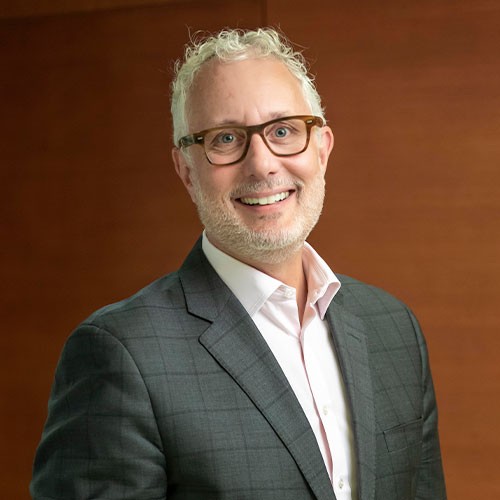
This news service carries an interview with a prominent figure in family office and wealth management sector in North America.
Regular FWR contributor Joe Reilly recently interviewed Michael Zeuner (main picture), managing partner of WE Family Offices, and a co-founder and board member of the UHNW Institute, of which this publication is exclusive media partner.
Zeuner, who is also a member of this news service’s talks about consulting roles at Booz Allen, strategy positions at banks and family office businesses. He sets out how these experiences shaped his business philosophy.
The article summarizes the original transcript; elements have been removed and compressed for brevity.
Joe Reilly: Where did you grow up?
Michael Zeuner: I grew up in Bucks County,
Pennsylvania where I spent my formative years in a little town
called Yardley, which is about halfway between New York City and
Philadelphia. I was an undergraduate at Brandeis
University in Waltham, Massachusetts. And then I did my MBA at
the University of Chicago. I graduated in 1990 with my MBA.
I went to work in Boston. I was supposed to have been accepted to the University of Chicago's MBA program right out of undergraduate. And I was looking for a summer job in Boston and wound up getting an offer from a bank that was called Shawmut Bank. Which got merged through all the banking mergers ultimately into Bank of America.
There was a woman who I consider my first mentor, Anne Holloway. I had gone through a temp agency to find a summer job, and Anne interviewed me. I told her I'm just doing this because eventually I'm going to go to business school. She asked where, and I said it was the University of Chicago. She said that she’d make a deal with me: If you want to work with me for two years, I'll give you real-life training. I deferred my MBA for two years and worked as a small business lender out of the Chinatown branch of the Shaman Bank, working with the lenders making loans to small businesses, including Chinese restaurants, fish companies and taxi medallions was the specialty of this branch. And it was good old-fashioned banking spreading financial statements doing loan underwriting and credit analysis.
After B-School, I started working in consulting. And I worked for Anderson Consulting for a couple of years, and switched to Booz Allen. At Booz Allen, I was in the New York office in the financial services practice, and I spent a few years working. I did about three years’ worth of project work with large commercial banks in their nascent investment banking groups.
What did you learn in your years there?
Michael Zeuner: I like to say that what I learned there
was a foundational skillset as a consultant that probably not
until 10 or 15 years later did I understand how important it was
and the implication of it. But what I learned in the consulting
days was that as an advisor you work in a team [and] your client
is a senior decision-maker who has a problem.
And your job is to go and ask questions, understand the problem, frame it, play it back, go out into the marketplace, do research, do analytics, look at best practices, talk to clients of the customer, talk to competitors, and come back and frame up for that decision-maker a series of choices, series of options.
And at the end of the day, it's ultimately that senior business decision-maker's choice. He or she owns the decision, but our job as advisors and consultants was to help them decide with a sense of confidence and information and background and context, and to help [them] look at different implications to different decisions.
But what was happening in that consulting conversation was that our firm was being paid a fee. And whether that client chose recommendation A, B, C, or D or whether they came up with their own or some combination, our fee was the same. And I took that for granted. There was a project fee that was paid for the work, irrespective of the outcome, and that was negotiated upfront. And then we just went about doing our work and giving our advice.
One of our contacts at the Chase Manhattan Bank asked me if I wanted to come work for the client. [This was a] typical consulting to client move. And he was the CFO of the Chase Manhattan Bank. And I spent some time with him and he said, “listen there's someone that I think you should meet who thinks a lot like you, who you would get along with.” Now, this was 1994, 1995, maybe even a little bit later, maybe 1996 or seven. He told me to meet Mel Lagamasino.
She ran the private bank, and I was told we would get along. I'm still working with Mel 30 years later.
There was a point in time in the mid to late nineties when the Chase Private bank, had no proprietary asset management capability; it had been sold. When you connect that to demand-driven businesses, our clients were wealthy all over the world and we needed to go and find them great investment solutions that we didn't necessarily manufacture. We didn't call that “open architecture” in the late nineties, but that's what it became.
We wound up with a proprietary asset management capability, and it became JP Morgan. But the interesting thing was back in the late nineties, we were experimenting, and we didn't know to call it open architecture, but we were experimenting with this idea of helping families buy the right financial products and services as opposed to necessarily selling or distributing financial products and services that we manufactured.
Was there internal resistance?
Michael Zeuner: There was some, but not a huge
amount.
Tell us about your jump to GenSpring.
Michael Zeuner: There's really two connects to be made
here. One is the open architecture thing, and the other is the
demand side versus supply side, beyond just what kind of
investment products they were looking for.
The role of the single-family office was to advise the family that they supported in making decisions around their financial life. And the people in the single-family office didn't earn a commission for the sale of a financial product or service. They were compensated to advice, to represent the interests of the family out in the marketplace, to help them buy and assemble financial products and services.
We thought, is there a business here? Is there an opportunity to create a business that replicates the single-family office business approach, but for many families? That was the hypothesis and that went beyond open architecture. And at the time, again, we're talking about early to mid-two thousands pre-global financial crisis.
Mel and I, and another partner from Chase thought, okay, this would be an interesting place for us to go to try to take the business to the next level instead of trying to be inside a financial institution and bucking that trend of closed architecture. Let's go to the other side and go into the family office side. There were several MFOs at the time. There was GenSpring.
One of the similarities to the period we're going through
now and the period back then is a lot of M&A in the space.
And GenSpring certainly was involved in a lot of M&A. What
lessons did you learn?
Michael Zeuner: It was a different time for sure. I
think that not so many lessons learned as to what's happening now
because I think the drivers today are a little bit
different. We weren't thinking about what does it take to
invest in technology? What does it take to invest in talent? And
the race for talent, it was there, but it wasn't as prevalent as
today. I think today there's a thesis that there is a benefit to
scale. At the same time, how do we maintain the intimacy of the
value proposition?
What did you learn about integration?
Michael Zeuner: It's hard. It's difficult that you must
have cultural alignment first and foremost. Even before
attempting integration trying to put two things together, and I
learned this at Chase as well because Chase was an acquirer,
obviously.
Where do efficiencies of scale come in with ultra-high
net worth clients?
Michael Zeuner: There are activities that can be scaled
in our businesses: manager sourcing and due diligence. You can do
that for one family, you can do it for 50 families, you can do it
for a hundred families. And there's scale benefit to that
technology.
We decided by 2021 to migrate our old proprietary reporting system over to Addepar. And it was one of the better decisions we've made from a business system perspective because the scale was very clear to us that what you had to invest.
We just were not capable as an economic matter of investing at the level that we needed to really keep up with the companies like Addepar, to keep up with cybersecurity, to keep up with the move to the cloud, there were so many different elements that we knew required scale that we were trying and we were doing our best.
But then it became clear that we could partner with a company like Addepar and benefit from their scale. If you look at us today, there's probably a few portals we can't get into, but we use a system called Canoe. There are many others like it where it's basically doing that every night automatically and then using AI to get it into Addepar. Analysts and associates in our firm are no longer doing that activity. And that's not really a value-added activity.
Great advisors: bred or bought?
Michael Zeuner: Bred. What we do is so unique: the way
we deliver integrated wealth management, the role we have, which
is not to displace any financial services provider. The fact that
we're not selling anything. We have no product to sell. That's a
skillset that is a little different than what we find in a lot of
traditional financial services companies. And we haven't really
been successful, at least in our experience, in hiring very
experienced advisors and bringing them into our business
system.
So what do you look for in a budding advisor?
Michael Zeuner: There are baseline technical skills. Do
they understand their way around different kinds of investments?
Are they analytical? And then beyond that, critical thinking. Can
they come in and ask questions? Can they challenge third parties?
Can they communicate in a way that's framework-driven?
And how long does it take before someone is truly
seasoned?
Michael Zeuner: At least seven, eight, nine, 10 years.
And before they're ready to be that integrated advisor in the
lead role with the family, it could be 10 to 15 depending on the
complexity of the family.
And what are your thoughts around retention after you've
trained those people?
Michael Zeuner: Here's where I think the retention issue
comes in, which is it's in the first two to three years. The
amount of training and learning that happens in that first two to
three years is extensive. I'm talking about just learning the
basics of even financial terminology. What is a private equity
investment? How is it different from a public equity investment?
The terminology of private investing is totally different than
public investing, the way you measure it.
Now, the issue for us is that at that level of one's career, you could go anywhere. You could go to a bank, you could go to a broker's firm, you could go to a family office, you could go to a multi-family office. Your skillset, if you've got it, is transferable. So, when we make this investment at the beginning of someone's career for that first couple of years, this is the link to what I was talking about before, which is that if we're asking those people to be doing a lot of very administrative, non-value-added activities, they're not going to stick around.
What do you benchmark your compensation
against?
Michael Zeuner: Market. We participate in market
compensation studies, and we look at by role even though some of
our roles are slightly different we do our best to understand
what the market is. It's other family offices, other multi-family
offices.
What common mistakes do you see families make
post-liquidity?
Michael Zeuner: [They are] investing too quickly,
thinking that they must put the money to work without really
being thoughtful about what the purpose of the money is for going
through an exercise to develop a very robust financial plan,
looking at sources and uses of cash. And I've rarely heard a
family say, “oh, I'm sorry I invested so slowly.” I have heard
families say, “I think I probably went too fast because it's a
very different exercise.”
How does AI help you in your sourcing today?
Michael Zeuner: I realized that for 15 years we've been
saying the same thing in slightly different words, but very much
the same thing over and over.
In the last two years, the machines ingested all that content and they processed it. If you go and ask for language that relates to what it is that we do and our value proposition and everything we've been talking about, machines have sorted it through.
I'm quite certain that people are putting things into ChatGPT and
we're not coming up because we're not a good fit for them. If
somebody says, I'm looking for a discretionary asset manager to
take 30 per cent of my portfolio and manage it this way, WE is
not going to come up in that search. But that's good because
that's not what we do.