


Company Profiles
Getting Into What Matters For HNW Families – An Interview With Kathy Lintz
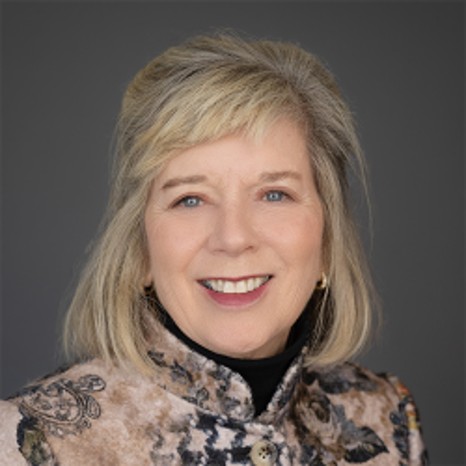
The following article is adapted from a podcast interview carried out by regular Family Wealth Report contributor, Joe Reilly, head of Circulus Group, Family Office Network based in Greenwich, Connecticut.
The interview was initially broadcast on the Private Wealth
podcast, hosted by the Ultra
High Net Worth Institute. Joe Reilly hosted Kathy Lintz
(main picture), a member of the board of directors at the
Institute and a prominent figure in the North American wealth
management sector. This year, she won a
Family Wealth Report Lifetime Achievement Award.
Lintz began her financial services career at Chase Manhattan Bank in New York City, where she helped develop one of the nation's first financial education and planning programs at the Chase Exchange.
This experience inspired her to become an early holder of the CFP certificate and build a fee-only comprehensive financial planning practice in St Louis. In 1990, she founded the firm that would become Matter Family Office, growing it into a leading multi-family office focused on independent investments, integrated planning, family wellbeing, governance, and philanthropy. She has a BA in history from Duke University.
Joe Reilly: Please tell us a little bit about your
background
Kathy Lintz: I grew up in Connecticut. When I went to
Duke, I was a history major, so I wasn't interested in finance at
that time. But I came back to New York, and I started working for
Chase Manhattan, and they were starting a financial education
program targeted to women. I remember back in this time,
financial planning was just in its nascent era so there were very
few certified financial planners.
In the financial industry, as a consumer, you could go with a brokerage firm, or you could be served by a trust company. There really weren’t financial planning firms at this time. So, when Chase started an education program targeted to consumers, in particular women, in Midtown Manhattan, at 48th Street and Madison, I raised my hand and I said, I really want to help educate and prepare regular people around personal finance.
And it was called the Chase Exchange. And this really resonated with me because my father had passed away when he was 39. I was only 16, and my mother was 38. And she turned the few hundred thousand dollars of life insurance over to an uncle in a trust company. And it was invested in the 70s in bonds, 25-year bonds. When inflation came, it ravaged them.
When Chase wanted to educate consumers to make good decisions, I thought, that's a good idea. I really would like to be a part of that. So that's what really moved me into the financial planning field. And then that became a passion project for me.
Reilly: And what was the Chase Exchange? What did your
folks do?
Lintz: We ran education programs through this center at
48th and Madison. We had people from Wall Street. These great
experts came and gave great seminars. We also did fee-only
financial planning for Chase consumers, and we did outreach
programs at people's workspaces. We would give “Lunch and Learns”
to consumers at their place of work throughout New York.
Reilly: Can you tell me a little bit about the founding
of KBL and working with athletes and how that led to
Matter?
Lintz: When my husband was in business school and when
we moved from New York to St Louis, I started working for a group
of sports agents – baseball and football agents – and that
was so much fun because every new contract for a young athlete is
a blank piece of paper. They're in new cities, new states to play
in, new terms. And so really, as an early CFP planner, I was able
to really, in a sense, help these young families create a
financial plan in what we call dog years, because for a young
athlete every year is so important. If they don't take advantage
of each year, then their outcomes are going to be very
different.
The average football player at that time had a four-year lifespan in the NFL, and the average baseball player was 10 years. And so, we really had to drill in and help dig in and help these young families make great decisions in very real time, because life was moving fast for these young families.
Reilly: And how did you come to work with them in the
first place?
Lintz: My neighbor in St Louis was a sports agent, and I
worked there for six years and needed to separate the financial
planning aspects of the work with the agents. I needed to be able
to fire clients because some of the athletes wouldn't take our
advice, and I didn't want to work with them anymore. The agents
really couldn't fire the clients because they were negotiating
their contracts and promotional relationships.
And I needed to be able to pick the clients that I wanted to work with. I started KBL Financial with 22 baseball and football players and two broadcasters, and it was really early – in 1990. It was one of the early fee-only financial planning firms. And I had to start it because there really wasn't a firm like us in the market.
Reilly: And what would the choice have been back
then?
Lintz: I think a full-service brokerage firm, trust
company, bank, but most of those sold investment products or got
insurance commissions or some sort of referral fee basis. The
fee-only financial planning industry really began in the late 80s
and early 90s.
Reilly: And so how did KBL eventually evolve into Matter
Family Office?
Lintz: The first 10 years were slow because I took as
many clients as I could handle working with two young children,
so I didn't load up my work. But by the end of the 90s, we had
about 50 baseball and football players and we had significant
business. Then in the early 2000s, we started taking more
business owners, larger families and more complex families. And
by 2002, 2003, we morphed into a multi-family office. We started
hiring people from Price Waterhouse and Ernst & Young with law
degrees and our clients got much more complicated. A year or two
after that, there was a name for what we were, which was a
multi-family office.
Reilly: What are your main types of clients
today?
Lintz: Our main clients are, I would call them first
generation wealth creators. About 60 per cent of our clients have
created their wealth during their lifetime. They're
multi-generational families. We serve two, three and four
generations in all those families. They're really looking for an
integrated, non-conflicted thought partner to help them think
across all the areas of their lives and help them make great
decisions.
Reilly: Where do you think efficiencies
of scale come in with UHNW clients?
Lintz: I think it's such a wonderful position that we're
in because we work with maybe 20 fantastic estate attorneys
across the country. We work with fantastic accounting firms. We
work with many of the best thinkers around the country serving
UHNW families. We get a broad perspective on strategies and
approaches and communication and ways to communicate with
families.
Reilly: How do you think about branding your firm and how
do you distinguish yourselves in a crowded field?
Lintz: We rebranded about 12 or 13 years ago and the way
we did that is we hired a wonderful firm out of Northern
California to help us figure out what our purpose was and be
clear about that. They interviewed our clients; they interviewed
our employees and they interviewed the people in our sphere of
influence, and everyone said a version of the same thing. They
said that our team helps families figure out what's important,
what matters to them and helps them get there and reach those
goals and objectives. That is how we came up with “Matter” and
then Family Office is who we are.
Reilly: In working with the families, do you think
there's a difference between stewardship and ownership?
Lintz: We're working with multi-generational families
that are looking at 100 years ahead. We're a firm that reflects
those families. We have 50 per cent women and 50 per cent men. We
have multiple generations within our same firm. We're all
thinking about stewardship and how to, I would say, respect each
generation's needs and create great positive outcomes across the
generations.
Reilly: How has your thinking about staffing models
changed over the years?
Lintz: Our service lines have evolved. I would
say first we were a planning shop and an investment shop. Now we
really focus on family operations because people's lives have
gotten much more complex. They need bill pay. They need record
keeping. They need consolidated reporting for very complex
balance sheets. They need integrated wealth planning, integrating
taxes, the cash flow, the transfer strategies, the estate
decisions. Then they need best in class investments. In
addition, we've really worked for over 25 years in building our
family learning and communication service line, which is the
overarching umbrella to everything that we do.
In other words, what information does each family member need to know and how do their decisions align with their purpose and how do they talk about these issues so that they can together make the right decisions across the generations? It really started with the athletes, because the athletes really didn't know a thing about finance. They're 24 years old. They're signing some big contract. We really started teaching athletes about stocks and bonds and taxes from the very beginning. We were sitting at kitchen tables with Value Lines showing them how to read charts and make great decisions.
So, we're not only doing technical training around finance, but we really have integrated the bigger challenges that multi-generational families have to navigate with a very robust and intentional curriculum that we've been working on for over 25 years. That's a new service line. We need to train our team around all four of those service lines. When you ask about staffing, it's trickier than it was.
Reilly: And why did you hire an industrial
psychologist?
Lintz: We started working with Courtney Pullen 18 years
ago to help build out that family learning and communication
service line that was related to communication preparation. We
had been doing financial literacy work for 10 years before that,
but we needed an industrial psychologist to help us build out
specific trainings and family meeting facilitation around
communication and the preparation that families needed to make
great decisions. In addition to the financial literacy
training.
Reilly: I know you spend a lot of time focused on family
meetings. How do you go about coaching families about how to have
good effective family meetings?
Lintz: We do a lot of listening. What's on their mind?
What are they worried about? What is the outcome that they want
to see? Helping them have a vision around the outcome of any
family decision or family meeting or family conversation is such
a positive thing because the picture of what they want to achieve
is clear for families.
Reilly: How would you describe the culture at Matter
Family Office and how do you maintain it?
Lintz: I think what we've tried to do is create the same
culture with the families and the employees and the owners of
Matter in that, if we can all be clear on the vision and the
purpose and we can treat each other with positive intent and
respect and some fun and some energy, then we can move mountains.
We must take care of our team just as we take care of our
families.
Reilly: What sort of competencies does someone in your
position need? What makes a good wealth advisor?
Lintz: It takes somewhere between 10 and 20 years to
build one. It's not a short path, but it's someone that can see
the full picture and `issue spot’. They don't have to be an
expert in every area, but they must be able to `issue spot’ and
be able to bring resources in at the right moment in the right
way for families to feel supported and partnered with and led at
the same time.
Reilly: What's been the most challenging decision in your
career and what did you learn from it?
Lintz: I think the most challenging decision in my
career is to realize that we needed an outside capital partner
and we needed to figure out exactly what the attributes of that
partner were.
We decided that we wanted a family that had a 100-year timeframe. We didn't want some of the more traditional private equity options. It just wasn't who we were. It's a great fit for others. It just wasn't the right fit for us. That was because we needed investment. I started Matter with literally a $25,000 loan from my husband’s 401K.
And that was the only capital that had ever come into the business. I paid him back with a 1962 Corvette. And because that was his dream car, we paid back $25,000 in a different way to his 401K.
But I paid him back from the company three years after starting with a classic car. But we were capital constrained. We needed to invest in technology. We had more opportunities than we had resources to manage the opportunity. And so, the hardest decision in my career was finding the right partner.
Reilly: And how does it matter adapting to new
technology?
Lintz: I'm so excited about the new technology. It's
because we're such a qualitative firm that we're going to use the
resources and the efficiencies that technology or improvements
are giving us to invest in deeper relationships with our
families, more intergenerational work, more education, more
time.
Reilly: What advice would you give someone aspiring to
work in a family office or in private wealth
management?
Lintz: On the family office side of the house where we
are, it's such an honor. It's a calling. It's a passion.