


Strategy
Can Fisher Investments' Marketing Magic Be Replicated?

This news service’s US correspondent sat down recently with Andrew Leneve to talk about the marketing lessons he took from Fisher Investments, his new role, and how the RIA sector should address marketing.
Is marketing the Achilles Heel for RIAs?
Independent advisory firms are often castigated for only spending
around 2 per cent of revenue on marketing, resulting in
sub-optimal organic growth.
Entering the RIA minority stakes arena last year, former Focus
Financial Partners executive Eric Amar (pictured below)
founded Accelerated
Wealth Partners with an emphasis on helping the firms it
invests in to boost their organic growth with state-of-the-art
strategies and tactics.
Eric Amar
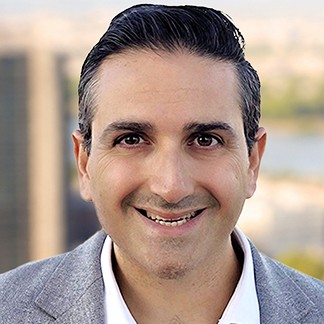
To implement this vision, Amar has hired Andrew Leneve (main picture), an executive who had 15 years’ experience at the industry’s most prolific marketer, Fisher Investments.
Not coincidentally, Fisher is also the country’s biggest RIA, having amassed a mind-boggling $386 billion in assets on the back of relentless and ubiquitous national print, television and radio advertising and direct-mail campaigns, combined with equally relentless sales follow-ups, spending an estimated 8 to 10 per cent of its revenue on the process. Oh, and the firm eschews M&A – all its growth is organic.
Fisher clearly knows a thing or two about marketing and sales, as does Leneve, a former vice president of sales and client service. Citing Leneve’s “deep expertise in organic growth,” Amar said Leneve “knows what works and he knows how to execute, something that is required for building firm-specific growth strategies and category dominance.”
Can any of Fisher’s marketing prowess be applied to smaller advisory firms, including Accelerated’s two current partners, Brooklyn Fi and RIA Advisors in Houston?
Family Wealth Report interviewed Leneve, now a partner at Accelerated, to find out.
“The sales execution piece can be lacking”
Family Wealth Report: You
worked at Fisher Investments, one of the industry's most
successful marketers, for 15 years. What was the most valuable
lesson you learned about marketing while you were
there?
Andrew Leneve: The fastest growing world
class organizations in the wealth management space speak clearly
to their audience, they tell a story that the prospective client
understands, and then, very importantly, once they get in front
of that advisor, they have a process to help them understand the
value proposition and hopefully onboard them.
It's a combination of both the marketing and the brand, but it's also the sales execution piece that I think can be lacking in some organizations, and you have to have both of those working in tandem.
“Data is probably the most overlooked component”
FWR: Fisher built growth
at scale with a national brand. Accelerated Wealth Partners is
working with independent RIAs that have their own culture, brand,
and client experience. Are there any systems or tactics from
Fisher's growth model that you think are transferable again in
terms of tactics primarily to independent
RIAs?
Andrew Leneve: I'd say number one is
building a brand that is about understanding your client
experience, right? I think the best brands tell these best
stories and understand what the client wants. The way you
communicate to your clients is paramount.
The second piece of that is you've got to have a growth-oriented culture internally at the firm, with a proven ability internally to grow via marketing, sales, and their delivery of service. The third piece is data, probably the most overlooked component of this process. The best firms out there use data to understand their clients, drive insights for where they should invest future resources and how they can improve their offering over time.
“Understand the ROI on every dollar invested”
FWR: What do independent
RIAs need to do to improve their organic growth, and what are you
specifically implementing in terms of marketing tactics or
strategies for organic growth at partner firms?
Andrew Leneve: First, it’s clarifying the
brand. There may be some work around optimizing company websites,
the content and materials that are delivered to prospective
clients throughout the evaluation process.
Then there is the data component, ensuring that we have strong attribution tracking, so that leadership at these firms understand the ROI on every dollar invested, whether that's digital marketing, client events or centers of influence.
Once you onboard a client, technology and operations must support not just the client but also the employees, [because] you must give time back to the advisor to be in front of the client, which is the end goal.
“The game is changing with online search”
FWR: What are some
examples of changes you’re seeing in
marketing?
Andrew Leneve: Certainly artificial
intelligence is the topic on everybody’s mind. But technology is
only as good as the people using it, or the strategy for
implementation. I think it's actually an opportunity for those
firms that have deep relationships with the clients to continue
to differentiate, as society spends more and more time with
technology.
Humans want genuine relationships. We need community, and we need to be connected to one another, and the more important the topic, such as your money or your health, the truer that is. We see some firms potentially leaning too heavily into technology, which can cause them to lose the essence of the client relationship.
The most obvious change in traditional marketing tactics is in SEO [search engine optimization]. If you're a digital marketing firm that has relied heavily on SEO in the past, the game is changing with online search. Call it AEO [answer engine optimization] or GEO [generative engine optimization], today you have to be a firm optimizing for AI search.
Our Brooklyn FI firm is doing an amazing job with optimizing for AI search, creating content that is aligned with how these AI search engines optimize. Quite frankly, I think that many firms are probably not investing enough in their strategy around AI search.
“If you can't measure it, you can't manage it”
FWR: RIAs are often
criticized for spending only around 2 per cent of their operating
budget on marketing, as opposed to Fisher, which spends about
four times that. However, there's an argument that RIAs get
enough new clients through referrals from existing clients or
centers of influence, and growth has been just fine. What are
your thoughts on that?
Andrew Leneve: If it works, you should keep
spending on it. One of the biggest challenges for most firms is
that they don't actually have line of sight into what's working
and what's not, so it becomes a risk-reward trade-off for those
firms. The old adage is: If you can't measure it, you can't
manage it.
You must have all pieces of the value chain working to spend effectively. The marketing engine does not work unless you have the sales execution to drive high conversion of those marketing opportunities. You then need to have high client retention and satisfaction that continues that recurring revenue, right?
And then you need to have an efficient operating system that protects the margins of the business, so you can reinvest back into growth of the company via sales and marketing.
“It starts with attribution”
FWR: You've mentioned
data and metrics. What are the key metrics that you look at to
measure marketing success?
Andrew Leneve: It starts with attribution
of where your prospective clients are coming from. It’s not the
glamorous part of this job, but it is the bedrock of
understanding what's working and what's not. As the head of
growth at an RIA, I need to understand what percentage of my new
opportunities are coming from each channel. Is that client
event-driven? Is it client referral-driven? Is it a digital
marketing campaign? Having that attribution tracking is
foundational to everything else that comes after.
From there we can't overlook the importance of the sales execution, and some models are different. A Fisher model has a very specialized focus, specialized sales from service. Other RIAs use an advisor model, where the advisor meets with the client, onboards them, and then services them.
Either way, you need to have KPIs [key performance indicators] internalized, so that you can understand who's converting at what clip. How do you convert across different client archetypes, across different channels? Which advisors potentially do best with which sort of client segments?
Once you start to gather that data you can really start to optimize over the long run how you invest in the right sorts of channels.
What should RIAs spend on marketing?
FWR What percentage of their operating
budget or revenue do you think that independent RIAs should
ideally be spending on marketing?
Andrew Leneve That’s a bit trickier to
answer. I go back to this point of where is the firm investing
across the entire organization. Say there are five main
components to any business: marketing, sales, practice
management, technology and operations, and leadership and
culture.
You mentioned spending 2 per cent of revenue on marketing earlier. I think that's probably well below what an optimized RIA firm could be spending if they had all five of those pillars working together, including the data attribution and strength of data organizationally.
Depending on the client segment you serve, you will have different economic dynamics. The cost to service the ultra-high net worth client is different than if you're serving a mass affluent client. So when you put all those pieces together, the percentage of revenue is not as simple as saying the target should be x per cent. My sense is that if you're at 2 per cent, you're likely leaving a lot of opportunity on the table.
“The age-old rule of thumb” for ROI
FWR: You've also mentioned ROI. What kind
of ROI are you looking for and how are you measuring
it?
Andrew Leneve: The most important
measurement is the cost of acquisition of a client, right? That's
a function of your spend to generate the opportunity, and it's
also a function of how well you convert each opportunity. As a
leader, you can start to look across your channels and say which
channels are the most attractive in terms of acquiring future
clients, and what is the lifetime value of that client based on
our assumed retention or churn rates? That's the end
metric.
Once you understand what it costs to acquire a client, and you understand how long you will retain that client, then you can start to make some determinations as to how much you're willing to spend over time.
The age-old rule of thumb has been kind of a one-to-one, give or take, between the cost of acquiring a client and first year revenue. As an example, if your average client would pay $10,000 a year in revenue, many firms will try and be at $10,000 or less in terms of total cost to acquire a client. So, there's actually quite a bit more work into it than just simply saying here's how much money we spent on marketing this year, and here's how many clients that we brought in.
It goes back to this understanding of where those clients come from by [a] channel, how much of that marketing spend is actually going to attract that next marginal client. Most firms that I've seen and worked with over the years are pretty darn successful under that one-to-one ratio.
Biggest marketing challenge for RIAs
FWR: What do you think is
the biggest challenge for RIAs when it comes to
marketing?
Andrew Leneve: Speaking to your audience in
a way that differentiates you and helps you stand out from the
crowd. This is an industry that has been built on buzzwords and
one liners. I think there’s a real opportunity of firms that have
put in sweat equity for many years.
We strongly prefer to partner with firms that have been founder-led for a long time, built from scratch, with strong organic growers. That sweat equity helps you to understand your clients, their problems, what they care about, and allows you to tell a story.
Those stories are what differentiate people and help connect you to your audience. I think it's really a storytelling business at the end of the day.