


Wealth Strategies
Blending Traditional Assets With Institutional-Grade Digital Markets
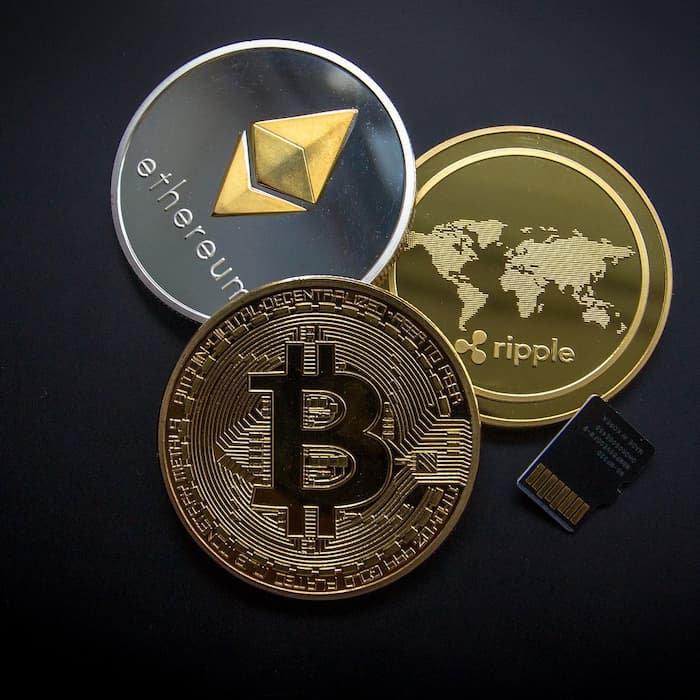
The author argues that what was once a niche has quite clearly become mainstream. And wealth managers need to keep up with this shift in their clients’ interests
The following guest article comes from Gracy Chen (pictured below), CEO at Bitget, a universal exchange. She writes about how the fast-moving world of digital assets – cryptocurrencies and tokens, among others – can sit alongside more familiar investments such as equities, bonds and commodities. The editors are pleased to share these insights; the usual editorial disclaimers apply to views of guest writers. Please jump into the conversation.
To comment, email tom.burroughes@wealthbriefing.com and amanda.cheesley@clearviewpublishing.com

Gracy Chen
Wealth managers are entering 2026 at a turning point for digital asset markets. For years, this asset class sat on the fringes of high net worth portfolios – curious, but often treated as speculative or just simply “too niche” to be of any real interest or commitment. However, now that phase is firmly over.
Data compiled in the middle of 2025 showed that today 96 per cent of institutional investors believe in the long-term value of blockchain and digital assets. If we focus just on bitcoin (BTC) exchange-traded funds alone, we can see that their total AuM at the beginning of December 2025 hovered at around $120 billion. In other words, even after the massive shocks the market suffered in October, these ETF levels have not fallen much compared with where they stood at the end of last year. This resilience makes one thing clear: investor interest is still very much going strong.
What was once a niche has quite clearly become mainstream. And wealth managers need to keep up with this shift in their clients’ interests. There is already more than enough evidence to show clearly that the next cycle of portfolio innovation will require a hybrid approach, blending traditional assets with institutional-grade digital products.
Going beyond momentum to real adoption
If we look back some years ago – say, around 2021 – it
has to be acknowledged that much of the so-called “adoption” at
the time was really speculative enthusiasm. Token prices were
running up simply because people believed they would.
Today’s environment is undeniably different. The market has matured, the infrastructure has grown more robust, and institutional capital inflows are shaping pricing and liquidity in ways that can actually last in the long run.
Crypto assets are now recognized as viable components in financial strategies, not just as short-term speculative trades. An EY survey conducted earlier this year highlighted that the vast majority of institutional investors globally have increased their portfolio allocations for digital assets. And many among them intend to continue doing so in the future.
From the point of view of wealth managers, this means that their clients increasingly expect them to provide advice that accounts for both TradFi and crypto worlds. One thing institutional customers value above all else is risk discipline, and diversification into digital assets doesn’t change that.
Building hybrid portfolios for HNW
individuals
Based on everything we just covered, wealth managers will
inevitably face one big question on a growing scale in 2026: how
to incorporate digital assets into portfolios skillfully and
intelligently.
One of the key hybrid-portfolio principles to keep in mind, in my opinion, is that digital assets should come as complementary diversifiers, not replacements. Most traditional investors aren’t really looking at crypto as a way to replace assets that they are already used to. But they do see this asset class as something that can be used to enhance their portfolios.
Tokenized treasury bills and tokenized money-market funds, for example, provide stable, yield-bearing instruments suitable for the conservative portion of a client’s allocation. According to CoinGecko’s mid-2025 data, the tokenized-treasuries market saw a massive 540 per cent leap between 2024 and 2025, reaching $5.5 billion in April. This places it among the fastest-growing tokenized RWAs and is prime proof of the ongoing interest from investors.
Another major thing to keep in mind is that digital asset exposure must be matched with professional execution. Institutional adoption has raised the performance bar, as high net worth investors expect the same quality of service in digital markets that they get in traditional finance.
We can already see how this expectation is reshaping the ecosystem. Brokers and fintech platforms that once focused on serving mostly retain clients are now expected to deliver institutional-grade liquidity, compliance, and reporting. Prime-brokerage services are now driving deeper liquidity and capital efficiency, fundamentally changing what a “good” platform looks like in the digital asset space.
This matters because liquidity and execution quality directly influence the risk profile of any allocation. A hybrid portfolio must be paired with a robust platform capable of institution-level performance.
Liquidity and execution risk in 2026
While digital markets are maturing, they are not yet uniform.
Liquidity fragmentation remains a significant challenge as we
head into the new year.
Even with global capital flowing in, there are signs of a tightening global liquidity cycle: slower broad credit growth, weaker macro drivers, more constrained speculative flows, etc. These factors suggest that execution risk is becoming more pronounced.
Meanwhile, tokenized RWAs add their own layer of complexity. The promise of unprecedented access to a wide range of assets has given them enough momentum to rise, but in reality, they come with a long list of caveats and drawbacks. Secondary markets remain thin, settlement processes vary, pricing can be inconsistent, and legal constraints for specific asset categories still very much remain in place, even if the assets themselves are on-chain.
This leads to a critical distinction that wealth managers must account for: ownership does not equal liquidity. Even high-quality tokenized assets may be difficult to unwind in stressed markets. In other words, execution quality becomes an inherent part of any asset-allocation decision.
What wealth managers can apply today
The way I see it, there are at least a couple of lessons that can
be drawn from institutional behavior so far to improve
wealth-management strategies in a meaningful fashion.
1. Favor structure over hype
Institutions don’t chase momentum, and they don’t invest just because something is trending. They prefer each decision to be clear-cut and fit into a structured plan.
For wealth managers, this means having pre-defined risk frameworks, using hedging tools and strategies to protect against sudden market swings, and running regular liquidity reviews to make sure clients can exit positions at any time without incurring unexpected losses.
2. Use transparent platforms
Professional investors today expect full visibility into how a platform handles their assets. Tools like proof-of-reserves and clear execution metrics make it possible to see in real time whether funds are fully backed and if trades are being processed efficiently.
This kind of transparency removes a lot of guesswork and helps build confidence that the platform is operating responsibly. Which is precisely why wealth managers should adopt the same expectations in their practices, as well.
When choosing where to allocate digital assets, they should look for platforms that openly show their liquidity, reserves, and execution quality. It’s a fairly straightforward way to reduce risk and ensure that clients are getting the level of oversight they’re used to from traditional finance.
3. Don’t underestimate importance of custody
Continuing with the topic of structure, make sure your custody setup is solid. Knowing that their digital assets are securely stored and protected is one of the most important building blocks when it comes to earning institutional trust.
The strongest setups today don’t rely on a single method – they combine different layers of protection. Some assets are held directly on-chain for transparency, while others are kept off-chain for added security. There are advanced signing methods like MPC (multi-party computation) that ensure no single party can move funds alone.
Insurance coverage is also a simple but efficient way to add another safety layer. And finally, cross-collateral frameworks can be used for diversified assets in the portfolio to support each other.
In simple terms, you need your storage to be as robust as what’s already being used in TradFi markets. Institutions naturally expect this level of security, so hybrid portfolios for high net worth clients should follow the same standard.
Why hybrid portfolios will become the norm
One final thing to remember is that hybrid portfolios are not a
trend – they are the natural evolution of wealth management
in a world where traditional assets and digital markets are
increasingly learning to coexist.
They will become the default approach because they match the reality of investor needs today and in the future. The opportunity to combine the best of both worlds: the stability and governance of TradFi with the flexibility and global access of blockchain-based instruments.
Wealth managers who embrace this shift faster will be better-positioned to deliver more resilient strategies for their clients and find success.
About the author
Gracy Chen is the CEO of universal exchange Bitget, known
for leading its user growth and expansion into a full Web3
platform, championing diversity with initiatives like
Blockchain4Her, and previously holding managing director roles at
the company after a career in media and investment. With degrees
from NUS and MIT, she's a prominent voice in crypto, focusing on
AI, PayFi, and fostering inclusivity in the Web3 space, making
her a significant female leader in a male-dominated
industry.