


Trust Estate
Big Shifts In Estate, Trust Mediations
A term that comes out of the philosophy of science can apply to a change in how those who try to break a deadlock on disputes over trusts, estate plans and related matters.
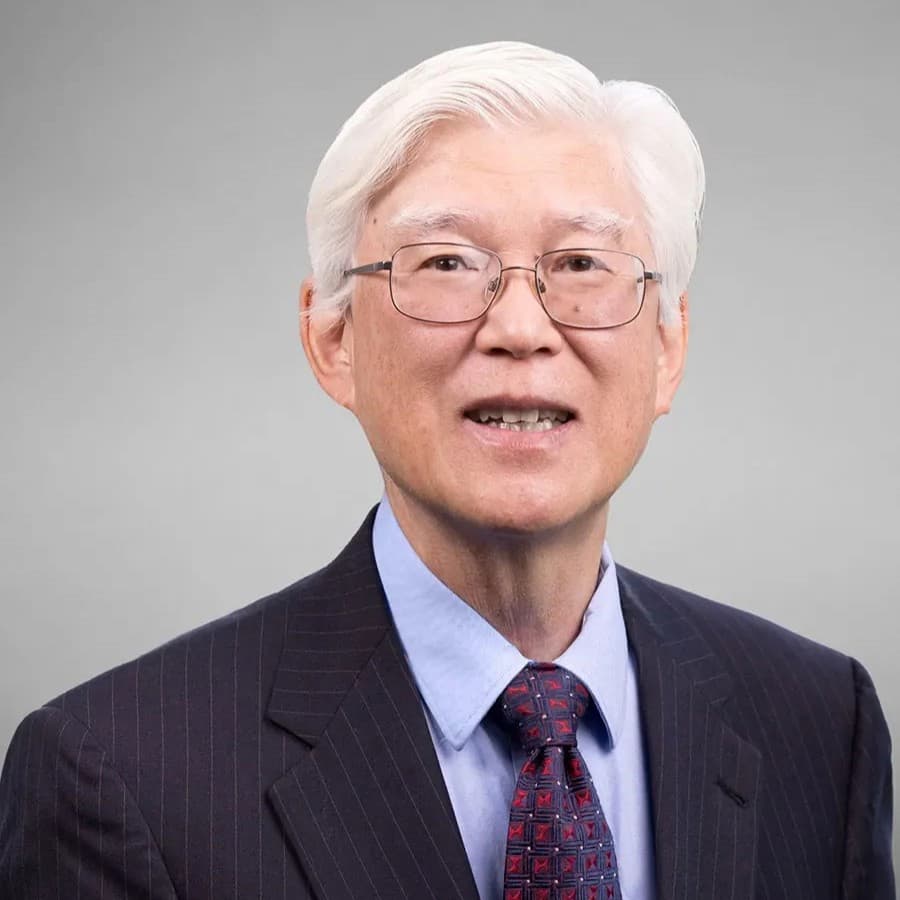
The following article comes from JAMS, a provider of alternative dispute resolution (ADR) services. The author, the Hon John H Sugiyama (Retired), is an eminent jurist and a mediator at JAMS. He sat on the Contra Costa Superior Court Bench in California. During the last nine years of his judicial career, Sugiyama served as the Supervising Judge for the Probate Division of his superior court.
This article looks at how ADR approaches work in areas of trust and estate law; they are clearly relevant as trillions of dollars of wealth changes hands as the Baby Boom generation passes on.
The editors are pleased to share these insights; the usual editorial disclaimers apply to views of guest writers. Email tom.burroughes@wealthbriefing.com and amanda.cheesley@clearviewpublishing.com if you have questions, comments and suggestions.
Paradigm, incommensurable viewpoint, and paradigm shift are enthralling terms. They evoke a sense of dramatic change in a previously settled way of thinking about a particular matter. They convey the impression that the implications of the change remain mysterious, yet to be fully grasped.
Although prominent in the study of the philosophy of science, the terms have crept casually into everyday parlance. Their migration into the practice of law could be helpful to attorneys, especially those engaged in mediation advocacy. The latter usage, from the perspective of estate and trust negotiations, will be explored in this article.
Origins
In 1962 with the publication of Thomas Kuhn’s Structure of
Scientific Revolutions, the concept of paradigm entered the
popular lexicon. Kuhn perceived that, rather than progressing in
linear sequence, science advances radically when new theorems are
compelled to account for accumulated, unexplained anomalies under
formerly prevailing principles.
Although he used the term in diverse ways, Kuhn essentially intended paradigm to refer to universally accepted principles in fields of study that offer both an explanation for phenomena and a guide for their further research. Over time, an emerging paradigm may prove to be irreconcilable with a preexisting one, with the two constituting incommensurable viewpoints. A paradigm shift, a process of transformation, may then occur with the replacement of old perceptions and assumptions with new propositions and principles.
Kuhn conceived his work through the study of the history of science, most notably physics. He wrote for illustrative purposes of the dominance in its field of Newtonian physics until its displacement by Albert Einstein’s theories of special and general relativity. He posed the latter development as a paradigm shift that radically transformed conceptions of how the universe functions.
Extending beyond its origins, Kuhn’s terminology has gained currency in popular discourse. The terms have been applied casually to virtually any contemporary change about almost anything, including those occurring in business, society, and culture. Advances in artificial intelligence, the evolution of attitudes toward social justice, and the perception of a rupture in the old-world order are only a few of the transformations that have been accorded the status of paradigm shifts.
Although the concepts underlying Kuhn’s terminology may not fit precisely with the practice of law, they may nonetheless offer guidance for those confronted with troublesome, intractable disputes during mediations. This piece will be directed toward that usage, specifically as applied narrowly to the field of estate and trust negotiations.
Mediations in general
Attorneys need not encumber their strategic and tactical vision
with notions of paradigms and paradigm shifts. Indeed, they
likely perceive that their innate sense of human behavior,
tempered by lessons gleaned from practical experience, will be
sufficient to lead them through most mediations. So long as they
are successful, they have no reason to reflect on whether their
efforts fall within one negotiation paradigm or another.
Every attorney, however, may encounter seemingly insurmountable barriers to settlement. If impasse looms, a reassessment of objectives and a recalibration of the means for their achievement may be warranted. Under such circumstances, Kuhn’s work may provide an easily applicable framework for undertaking that process.
What is the first party’s negotiation paradigm? Is the second party’s paradigm the same? If they appear incommensurable, may a shift to one or the other be made? Seeking answers to these questions may enable attorneys to determine with some degree of rigor whether and how to negotiate further.
In this context, the notion of paradigm does not follow Kuhn’s conceptualization of a grand theorem supported by derivative hypotheses. Instead, paradigm may be used more prosaically to encompass prevailing assumptions and expectations about mediations. Implicit also in that view of paradigm is the perception that parties will act rationally to achieve reasonably attainable objectives.
From this perspective, the basic assumption is that a desirable outcome may be sought more economically through mediation instead of trial, and the general expectation is that more control over the outcome may similarly result from mediation rather than trial. Binding both assumption and expectation is the perception that parties will be willing to make informed concessions so long as reasonable objectives remain attainable.
Within this framework, two distinct paradigms may be encountered during estate and trust mediations. For ease of differentiation, one will be designated objective and the other subjective.
Estate and trust mediations
Estate and trust litigation generally involves disputes over the
inheritance of wealth. The principal issues in dispute are
elemental and recurrent. They involve the valuation of assets
subject to inheritance, the specification of the division of the
assets among surviving beneficiaries, and the determination of
how and when the distribution of the assets is to occur.
When disputes arise over these issues, a simple maxim, penned centuries ago but still vibrant today, captures the essence of the conflict. As written by Niccolo Machiavelli in The Prince, “[M]en more quickly forget the death of their father than the loss of their patrimony.” Thus, in an inheritance contest, the nature of the struggle is embedded in human nature. If beneficiaries perceive that, relative to others, they have been treated inequitably, litigation to rectify the imbalance may ensue. Those bequeathed more will seek to relinquish as little as possible. For those bequeathed less, the reverse controls, to acquire as much as possible.
When these goals are operative, parties frequently choose to negotiate within objectively ascertainable parameters. One party makes a high demand and the other counters lower. Over time through incremental concessions the parties move closer to each other. Eventually they stumble upon a point where they perceive that no more will be offered and no more will be obtained. Whether through exhaustion or design, settlement may ensue. Otherwise, the self-infliction of egregious loss for all may be the alternative.
Implicit in the application of this paradigm is the assumption that parties will act rationally in pursuit of reasonably achievable goals. The cost and probability of success at trial are weighed against the value of terms offered in mediation. If the trial assessment and the mediation proposal overlap, settlement presumably will be the preferred outcome.
Paradigm shift
Unavoidably, however, negotiations may falter if parties proceed
under conflicting paradigms and their attorneys fail to grasp the
difference. The objective assessment of proposals may be
supplanted by subjectively motivated responses. The latter often
devolve from anger and suspicion.
These emotions may perniciously undermine the objective paradigm. A subjective desire for the imposition of unilateral demands may supersede the objective evaluation of mutually beneficial proposals.
The variables at play in the latter negotiation paradigm must be recognized and addressed for settlement to follow. The harmful effect of subjectively grounded variables on mediation behavior, however, may not be easily overcome.
Consumed by anger and suspicion, some parties seek retribution instead of resolution. Parents may not treat each child in the same way. Siblings may, and often do, mistreat each other. Resentments and grievances may fester from years of perceived abuse. With the death of parents, children who believe they have been treated unfairly may view inheritance contests as an opportunity to wreak revenge. The infliction of harm, by acting unreasonably and getting substantially more than others or preferably ensuring that others get nothing at all, becomes the goal of the aggrieved. Thus motivated, they have little incentive to make concessions during negotiations.
Experience shows that negotiations pursued within the confines of the subjective paradigm are difficult to conclude successfully. Behavior at an interpersonal level is difficult to shift. Magic spells have lost their allure. And more critically such incantations are difficult to pronounce correctly. Some contemporary measures, however, may warrant consideration.
Texts on negotiation strategy note several possibilities. Exploring interests rather than arguing over positions may be helpful. Negotiating over interrelated issues together rather than addressing them separately may be beneficial. Seeking collaboration rather than engaging in adversarial confrontations may induce joint problem-solving. Each approach may serve to diffuse tension, to redirect the controlling paradigm.
Although seldom acknowledged openly, misdirection may also merit consideration. Feigning interest in something of lesser personal value may direct attention away from that which may actually be desired. This approach finds expression in the maxim influenced by Sun Tzu in the Thirty-Six Stratagems: “Make a sound in the east, then strike in the west.”
Sometimes deception matches well with the passage of time. The overriding effect of emotional strains may not surface until negotiations have formally commenced. Mediation under that circumstance may not be an appropriate forum for addressing such emotions. Seeking to find a way to force a change in attitude in just a few hours may be elusive. Postponement of the mediation may be a preferable option.
A poem taught to every schoolchild in Japan illuminates this point. A bird would not sing. Three lords who sought dominance in Japan were asked what they would do:
Oda Nobunaga: “Kill it.”
Toyotomi Hideyoshi: “Make it want to
sing.”
Tokugawa Ieyasu: “Wait.”
The three lords were strikingly different in personality. Nobunaga was rash and decisive. Hideyoshi was subtle and complex. Ieyasu was patient and calculating. Of note, it was the third lord who ultimately prevailed in the quest to rule Japan.
The passage of time affects all emotional behavior. Although attorneys may pride themselves in their ability to play three-dimensional chess, they cannot shield parties from the inexorable pressure of time, the uncontrollable fourth dimension. As time passes, estate and trust assets may be depleted. Opportunities for their investment may be lost. Their total value may be dissipated. Control over their distribution may be redirected. These consequences may lead parties to prefer the control that may be maintained through settlement rather than the uncertainty that will persist until a judicial determination is rendered.
Other emotions may also derail mediations. In seeking to circumvent deadlock, attorneys may find heuristic value in identifying and assessing the negotiation paradigms that have been invoked. By doing so, attorneys may be able to determine systematically how they may optimally proceed with negotiations. That endeavor involves ascertaining the answers to only a few basic questions. Have the parties negotiated under different paradigms? Are the viewpoints reflected in the paradigms commensurable? If not, how may a shift from one paradigm to the other be induced?