


Technology
AI Won't Fix Wealth Management's Data Problem
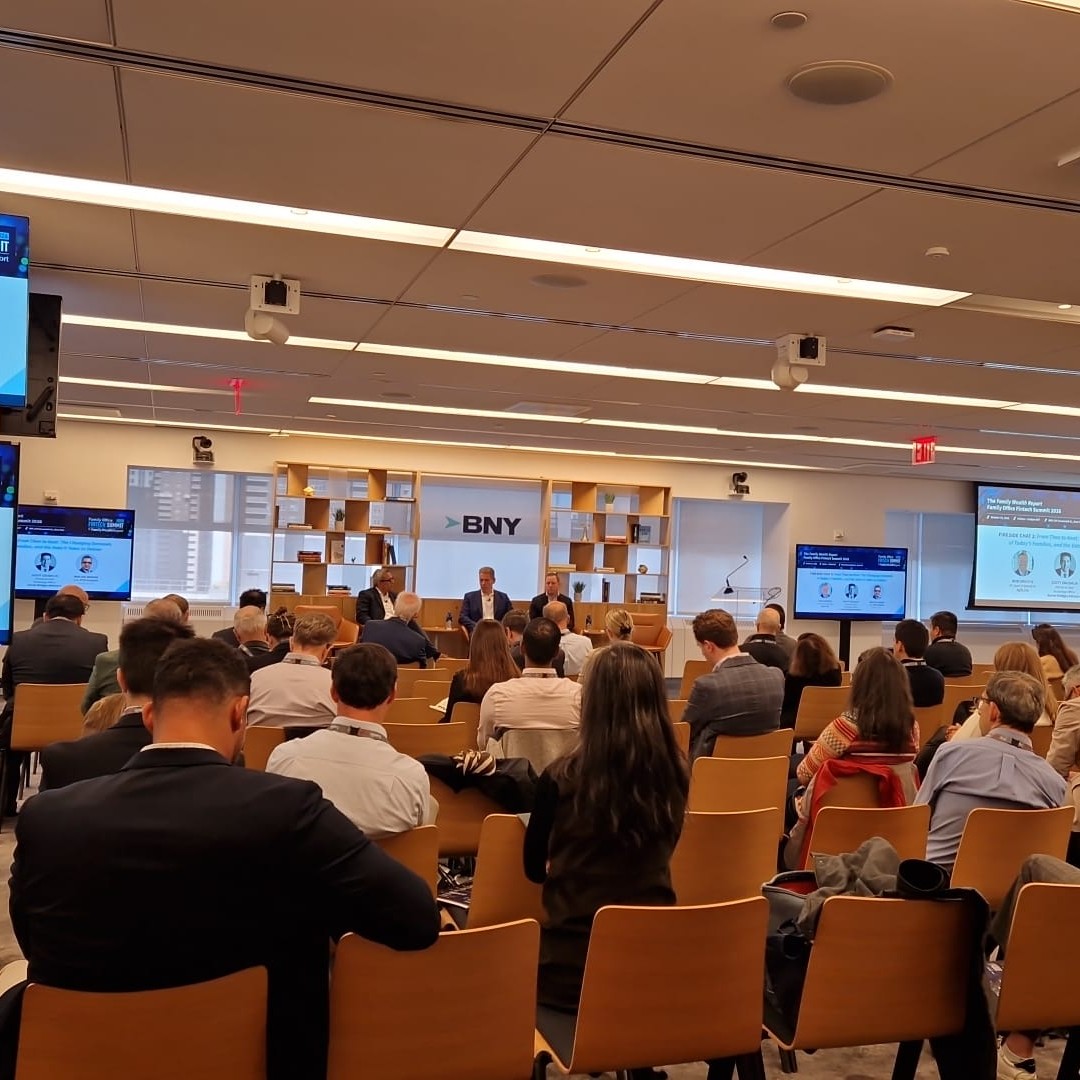
The author of this article, who took part in a recent discussion on AI and wealth management in a conference hosted by FWR, poses the question to firms: Is their data good enough for what they want AI to do?
Following the Family Wealth Report Family Office FinTech Summitt in Manhattan last week, we carry this report from PCR, a firm working in the area of data aggregation and reporting. This account of a panel discussion comes from Ranjan Mishra, CEO of PCR, who spoke alongside Scott Coughlin of Seven Bridges Advisors and Rob Christie of AgilLink.
Wealth management firms are investing heavily in artificial intelligence, looking for ways to improve efficiency, personalize client service and deliver more sophisticated insights. But I believe many are overlooking a more fundamental question: Is their data good enough to support what they want AI to accomplish?
The industry has spent years developing better reporting systems, client portals and investment technology. Yet many firms still struggle to bring together a reliable picture of a family's wealth. Investment information sits across custodians, private fund managers, banks and other institutions, often in different formats and systems.
AI may make it easier to analyze that information, but it cannot compensate for what is missing, outdated or inconsistent. The firms that will get the most from AI will not necessarily be those that adopt it first. They will be those that have invested in building a more complete and dependable financial data foundation.

Families expect more than investment
reporting
This was a recurring theme at the recent Family Wealth Report
Family Office FinTech Summit in New York, where I
participated in a discussion with Scott Coughlin and Rob
Christie.
One point stood out: The expectations of wealthy families have changed considerably, and the information required to serve them has expanded just as quickly.
Families increasingly want more than periodic investment statements. They expect personalized reporting, greater transparency, timely access to information and support across a much broader range of financial activities. As Scott put it, “The array of services has expanded dramatically,” while making the operational challenge clear: “You can’t scale the business if you do everything manually.”
That creates a challenge for family offices and wealth advisors. A firm may manage a portion of a family's investment portfolio while advising on a much larger financial picture. During our discussion, Scott shared that his firm manages approximately $5 billion in assets but advises on nearly $15 billion. Why the gap? As he explained, “because ultra-high net worth people don’t give you all their assets.” Wealthy families rarely maintain all their assets with one institution or advisor. Their financial lives may include traditional investments, private equity, real estate, operating businesses, trusts, cash accounts and other holdings spread across multiple providers. If an advisor only sees the assets under direct management, how much of the family's financial picture can that advisor truly understand?
This is where I believe the industry's approach to data needs to evolve. The objective should not simply be to collect more information. It should be to make information from different sources usable, consistent and accessible within the systems firms already rely on.
Alternative investments expose the problem
Nowhere is this challenge more apparent than in alternative
investments. Private equity, private credit, hedge funds and
other alternative assets represent a meaningful share of family
office portfolios, in fact, they make up about 35.5 per cent of
the average single-family office portfolio (source:
JP Morgan, 2026). Yet the information associated with these
investments often arrives through capital account statements,
investor portals, notices and other documents that vary
considerably by manager.
Unlike traditional custodial data, there is little consistency in how this information is delivered. Rob Christie described how having investment data in the ledger was once “nice to have,” but client now expect it to be “timely and accurate” rather than having teams “scrambling to get six months’ worth of data in one day.”
Technology has improved the ability to extract and process these documents, but that is only part of the solution. The information must still be interpreted, normalized and validated before it can be used reliably for reporting and analysis.
In my experience, this is one of the most underestimated challenges in wealth management technology. Firms often focus on what a new platform can display without giving enough attention to the work required to make the underlying information dependable. And, as AI becomes more embedded in investment reporting and decision-making, those weaknesses will become more consequential.
An AI-generated liquidity forecast, for example, is only useful if it accounts for the family's relevant cash balances, investment commitments and expected capital calls. Missing information can lead to a misleading conclusion, regardless of how sophisticated the technology appears.
The opportunity is a broader view of wealth
There is also a significant opportunity beyond improving existing
investment reporting. Historically, many wealth management
systems have focused primarily on assets held at traditional
custodians. But a family's financial position extends well beyond
those accounts.
With appropriate client permission, firms can increasingly incorporate information from outside bank accounts, deposits, credit relationships and other financial institutions alongside custodial and alternative investment information.
Consider the questions an advisor could address with a more comprehensive view. Does the family have sufficient liquidity to meet upcoming capital calls? How are borrowing obligations affecting its financial position? Are there assets or accounts outside the primary investment portfolio that should inform estate or tax planning discussions? These are practical questions that families already expect their advisors to help answer.
Of course, bringing more financial information together also comes with greater responsibility. Families need assurance that their information is accessed with appropriate permission, handled securely and used for clearly defined purposes. As AI becomes more prevalent, those controls will become increasingly important.
Getting the data right comes first
AI technology will continue to evolve, and the applications
wealth management firms use five years from now may look very
different from those available today. What is unlikely to change
is the need for accurate, timely and consistent financial
information.
One area that I believe deserves more attention is the value of historical financial data. Years of consistent investment positions, transactions and capital activity provide context that cannot easily be recreated. As AI capabilities evolve, that history will become increasingly useful for identifying trends, evaluating liquidity and understanding how a family's financial position changes over time.
Having worked in financial data aggregation for more than two decades, I've seen considerable advances in how firms collect, process and use investment information. Yet many of the underlying challenges remain the same. Financial information must still be collected from different sources, normalized, validated and made available in a format that firms can use. AI introduces new possibilities for family offices and wealth managers, but it doesn’t eliminate that underlying work. In fact, it makes getting the data right even more important.