


Alt Investments
Independent Films' Overlooked Place In Alternative Investing

Entertainment financing hasn't had what other alternative asset classes take for granted: a public index, standardized comparable-deal data, and an accessible packaged product an advisor could actually put in front of a client. There have been ups and downs. Recent data points to renewed and more structured growth.
Fortunes have been made and lost in films, and the dramas around the financial side can be on a par with what ends up on the screen. How does this fit into the “alternative investment” space and what should investors think about it?
The following article, about the business of film financing and the investment opportunities around it, including tax incentives, comes from Michael Gordon Bennett (pictured below). He is a writer, director, and producer, who has three decades of experience in independent film and television; he founded 727 Squared Entertainment. Gordon Bennett writes on film financing and capital formation at Capital Meets Story on Substack.
The editors are pleased to share these insights; the usual editorial disclaimers apply to views of guest writers. To comment, email tom.burroughes@wealthbriefing.com and amanda.cheesley@clearviewpublishing.com
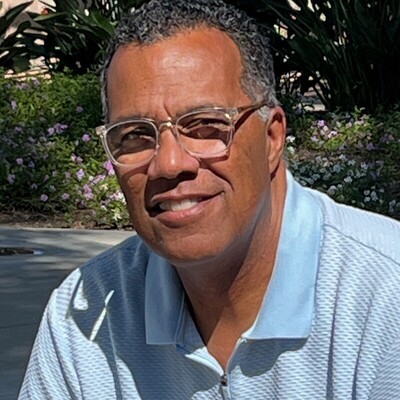
Michael Gordon Bennett
A while back, researching how family offices have approached entertainment over the years, I came across two pieces this publication ran in 2013 and 2014. They were a guest opinion on tax incentive-driven film investment structures, and a profile of a fund providing senior secured debt against film and television productions rather than betting on box office.
Both made a case that seem almost prescient a decade later: that film investing didn't have to be a pure gamble, that structure and government incentives could make the asset class genuinely investible rather than speculative.
The topic went quiet after that, and it's worth understanding why, because the reasons are legitimate rather than a case of anyone missing something obvious. Entertainment financing has never had what other alternative asset classes take for granted: a public index, standardized comparable-deal data, an accessible packaged product that an advisor could actually put in front of a client.
What exists instead is a small, fragmented community of specialty lenders and sales agents, each underwriting deals their own way, with terms that are almost always confidential and rarely benchmarked against anything comparable. Access has historically run through relationships rather than any efficient allocation of capital toward good risk-adjusted opportunities. It's genuinely hard to write a diligence-driven story about an asset class that operates that way.
The data that does exist backs up the caution, though it's worth being precise about what it measures. Film data researcher Stephen Follows, in the most rigorous public breakdown available on the subject, found that among independent films reaching theatrical release specifically, almost 60 per cent failed to recoup their costs. This figure was drawn from films released between 1999 and 2018, still cited as the industry's working reference point in film-financing guides published as recently as this year.
His methodology excludes straight-to-streaming and television releases, which now represent a growing share of how independent film reaches audiences, and carry a distinct economic profile of their own. Government production tax incentives sit at the other end of the reliability spectrum: California's Program 4.0 now offers a 35 per cent refundable credit on qualifying spend under a $750 million annual cap, and Georgia paid out $1.08 billion in transferable film tax credits in fiscal year 2024 alone. This is real, statutory, and entirely independent of whether a film ever turns a commercial profit.
On the return side specifically, two comparison points are worth knowing. Standard equity deal terms in independent film typically structure investor recoupment at 110-120 per cent of principal before any backend profit split begins. This is a modest, negotiated premium built into the deal itself, contingent on the film generating enough revenue to reach that position at all.
For a sense of what genuine principal-protected structures can return elsewhere in the market, comparable structured notes, which are instruments that pair a guaranteed floor with market-linked upside, they typically return anywhere from 0 per cent up to the mid-teens annualized in favorable conditions, with a current five-year S&P 500-linked note in the market capped at 41.5 per cent over its full term. That range is a useful benchmark for what "protected" ought to mean in any asset class, entertainment included.
Institutional interest in the space has been genuinely volatile, worth noting rather than overstating. Private equity and venture investment in movies and entertainment collapsed 73.5 per cent between 2022 and 2023, from $10.46 billion down to $2.77 billion across just 142 deals, according to S&P Global Market Intelligence.
But more recent activity suggests a renewed, more structured phase. A recent piece aimed at wealth advisors, from Robertson Stephens Wealth Management, described a real shift already underway in how sophisticated capital enters media. It is moving away from financing individual projects and toward structured equity partnerships with negotiated downside protection and governance rights. Separately, a company called FilmHedge launched a joint venture film and television fund with a New York asset manager this spring, lending against pre-sales and government tax credits. Its founder has spoken publicly about entertainment investing as a wealth preservation and tax strategy as much as a hunt for the next hit; this is a genuinely useful reframing for advisors whose clients ask about this space.
It's worth being precise about what that activity does and doesn't address, since I think it points toward where the real opportunity still sits. FilmHedge, like most lenders in this space, requires real collateral before it will lend. These are tax credits already secured, pre-sales in hand, a completion bond in place. That's a sound, disciplined way to lend, and a genuine improvement over how this industry has financed itself historically.
But it also means even the most innovative platforms built to modernize entertainment lending are, by the nature of being lenders, structurally confined to a later stage of the process. None of them touch the gap that actually determines whether most independent films get made at all: the earlier, harder problem of helping a project reach the point of having any collateral to lend against in the first place, as in a locked script, attached talent, a real budget, a package a lender or completion bond company would actually accept.
That earlier stage is where independent film has quietly lived with an unsolved trust problem for decades, largely untouched by the recent wave of institutional interest, which has understandably gravitated toward the larger, more collateralized end of the market.
That gravitation is worth naming plainly, because it points to where advisors should be looking. A great deal of enthusiasm for entertainment financing is aimed at studio-scale activity, involving large private equity commitments, slate deals, even crypto and tokenization pitched as the future of Hollywood capital. Those deals are highly visible, in part because their size generates its own attention. But visibility and return on capital are not the same thing.
A film budgeted at a fraction of a studio release only has to recoup a fraction as much before profit begins, and it never has to compete for the same audience a nine-figure release needs just to justify its own marketing spend. The more interesting risk-adjusted opportunity in entertainment financing may sit quietly at the smaller end of the market precisely because so little capital has bothered to structure itself to reach it properly.
I've spent the past two years working on an approach built specifically for that earlier, smaller tier. It is about treating capital protection and packaging-stage risk as two separate problems rather than one bet, using mechanisms independent of any single film's outcome. I don't think that idea is unique to me; I think it's the next logical step in the direction this publication was already pointing a decade ago.
It felt worth writing this down, both as an update to where things stand and as an invitation. If any of your readers are already thinking about entertainment as part of a family office or high net worth portfolio, I'd welcome the conversation.